Showing posts with label jnorm. Show all posts
Showing posts with label jnorm. Show all posts
Friday, August 9, 2013
It's not necessary for me to give a response
To Drake's 68 Theses Against Jnorm's Eastern Orthodox Theology Proper: Case Studies in Ad Hoc Reasoning.
I saw his response as insufficient, and error filled (most of what I said still stands). And not only that, he recently changed his mind again on some things (he has a tendency to change his mind a lot) and he doesn't seem to notice that it's in conflict with some of his past responses to us. And so he is (once again) the black knight.
I saw his response as insufficient, and error filled (most of what I said still stands). And not only that, he recently changed his mind again on some things (he has a tendency to change his mind a lot) and he doesn't seem to notice that it's in conflict with some of his past responses to us. And so he is (once again) the black knight.
Saturday, February 4, 2012
Another Look at Romans Chapter 9
A conversation I had with someone else:
I see Thee Elect One as being Jesus Christ and so the Elect group are all those Elected In Christ. In this sense I believe in corporate election.
Originally Posted by lonehunter
Because Christ is the starting point. Let's look at some Old Testament prophesies about Christ being chosen:
Isaiah 42:1
"“Here is my servant, whom I uphold,
my chosen one in whom I delight;
I will put my Spirit on him,
and he will bring justice to the nations."
For a fuller typological context you can read to verse 7. But this shows that the Messiah is also Chosen or seen as Thee Chosen One. Let's look at another passage in Isaiah:
Isaiah 49:1
"Listen to me, you islands;
hear this, you distant nations:
Before I was born the LORD called me;
from my mother’s womb he has spoken my name."
To get the fuller typological context read all the way to verse 13. In this we see He is thee Called One. He is also a Nation, the True Nation of Israel, but I don't want to get into that right now. But yes, Jesus is the Elect One! This is seen more clearly in the New Testament.
1st Peter 1:20(read verses 18,19, and 21 too)
"He was chosen before the creation of the world, but was revealed in these last times for your sake."
and
1st Peter 2:4(you can read up to verse 6)
"As you come to him, the living Stone—rejected by humans but chosen by God and precious to him"
Jesus being Thee Elect/Chosen One can also be seen by Clement of Rome, one of the Apostolic Fathers
Clement of Rome
http://www.ccel.org/ccel/schaff/anf01.ii.ii.lviii.html
"May God, who seeth all things, and who is the Ruler of all spirits and the Lord of all flesh—who chose our Lord Jesus Christ and us through Him to be a peculia people—grant to every soul that calleth upon His glorious and holy Name, faith, fear, peace, patience, long-suffering, self-control, purity, and sobriety, to the well-pleasing of His Name, through our High Priest and Protector, Jesus Christ, by whom be to Him glory, and majesty, and power, and honour, both now and for evermore. Amen."
You are(I assume) a protestant and so you may not like the Book of Wisdom and the Book of Enoch, but if you read them then you will also see what I'm saying here. Election is Christ-Centric! For there can be no Election apart from Christ. Thus, He is thee Elect/Chosen One, and it is by way of Him that we become elect. Election in Christ is primarily Corporate and secondarily individualistic because the Covenant Community is inherently pluralistic. There is no such thing as a lone ranger Christian, correct?
Jesus said:
Matthew 18:20
For where two or three gather in my name, there am I with them.”
Noticed that Jesus never said wherever one is gathered in my name. Thus being In Christ is inherently Communal. It is inherently Koinonia.
Eph 2:11-19 shows that it is pluralistic. That it is covenant community based. And so it is the community that exist in Christ that is primary. The individual who is united to the community is secondary.
For more info about Christ being Thee Chosen one and how we are chosen by way of Him, well, you can listen to this mp3 if you want:
Jesus - The Chosen and Beloved

Yes, I agree with you that God's promise is given to those in Christ, as opposed to (all) the literal descendants of Jacob. However, the word Chosen is another way of saying Elect, and so Christ is the Elect One. And so I don't believe He is the recipient of the promise. What I believe is that He is the promise itself.
Christ is the promised seed as seen in Galatians.
Galatians 3:16
The promises were spoken to Abraham and to his seed. Scripture does not say “and to seeds,” meaning many people, but “and to your seed,” meaning one person, who is Christ.
Christ is also a Nation, the true Nation of Israel. If you look at the typology used by the Apostles in reference to Jesus then you will be able to see how Jesus is Israel.
Matthew 2:14-15
So he got up, took the child and his mother during the night and left for Egypt, where he stayed until the death of Herod. And so was fulfilled what the Lord had said through the prophet: “Out of Egypt I called my son.”
Hosea 11:1
“When Israel was a child, I loved him,
and out of Egypt I called my son."
The Church, which is His body, is also seen as the Israel of God:
Galatians 6:16
"Peace and mercy to all who follow this rule—to the Israel of God"
And so in this way we can see the connection between the Promised Seed(Who is Jesus) and all those who believe in the Promise.
We can see the connection between the Nation of Israel (Who is Jesus) and all those who want to be citizens of this Nation. Which is also the Kingdom of God for the Kingdom of God is connected to the Person of Christ. Christ is the very core, the very foundation of it all.
So what does this have to do with Romans chapter 9 you ask? Well, even-though there is no such thing as an infallible hermeneutic, I will make use of a common one in where Scripture is interpreted by Scripture, and so lets Interpret Romans Chapter 9 with not only other chapters from the book of Romans, but also Galatians chapter 3, Ephesians chapter 2, and maybe a few other sources from the Old Testament.
I truly believe that when we do it this way then we will see what Paul is trying to say more clearly.
Let's interpret a good portion of Romans chapter 9 through the lens of Galatians chapter 3.
Galatians 3:19
"Why, then, was the law given at all? It was added because of transgressions until the Seed to whom the promise referred had come. The law was given through angels and entrusted to a mediator."
Galatians 3:22
"But Scripture has locked up everything under the control of sin, so that what was promised, being given through faith in Jesus Christ, might be given to those who believe."
Galatians 3:23-29
"Before the coming of this faith, we were held in custody under the law, locked up until the faith that was to come would be revealed. So the law was our guardian until Christ came that we might be justified by faith. Now that this faith has come, we are no longer under a guardian.
So in Christ Jesus you are all children of God through faith, for all of you who were baptized into Christ have clothed yourselves with Christ. There is neither Jew nor Gentile, neither slave nor free, nor is there male and female, for you are all one in Christ Jesus. If you belong to Christ, then you are Abraham’s seed, and heirs according to the promise."
Now, if we look at Romans chapter 9 then we will see that there were certain periods of time in where it was about which lineage would be the one to carry the promise seed.
Romans 9:5
"Theirs are the patriarchs, and from them is traced the human ancestry of the Messiah, who is God over all, forever praised! Amen."
Now let's look at what I quoted from Galatians with what I underlined in Romans 9:5 and let's compare them to the two examples given by the Apostle in verses 6 to 13.
For not all who are descended from Israel are Israel. Nor because they are his descendants are they all Abraham’s children. On the contrary, “It is through Isaac that your offspring will be reckoned.”In other words, it is not the children by physical descent who are God’s children, but it is the children of the promise who are regarded as Abraham’s offspring. For this was how the promise was stated: “At the appointed time I will return, and Sarah will have a son.”"
In this we see that the lineage of the promise seed would go down Isaac's family line and not Ismael's for in Galatians it says that Isaac was a son based on a divine promise while Ismael a son of a bond-servant woman. Now let's look at the next example.
"Not only that, but Rebekah’s children were conceived at the same time by our father Isaac. Yet, before the twins were born or had done anything good or bad—in order that God’s purpose in election might stand: not by works but by him who calls—she was told, “The older will serve the younger.”Just as it is written: “Jacob I loved, but Esau I hated.”"
In this we see that the lineage of the promise seed would go to Jacob instead of Esau. Why? Faith! God foresaw that Jacob would believe while Esau wouldn't. In Paul's terminology, faith is not a work. We can see this all throughout the book of Romans, and Galatians.
A couple patristic quotes about the issue:
Quote:
"God does not have to wait, as we do, to see which one will turn out good and
which one will turn out bad. He knew this in advance and decided accordingly."
Saint John Chrysostom, Homilies on Romans....as quoted from the Ancient Christian commentary on scripture volume 6, edited by Gerold Bray and Thomas C. Oden page 250
Quote:
"Thus God chose Isaac and rejected Ishmael and the children of Keturah. So also
he chose Jacob over Esau, even though both were formed together in the womb. Why
be surprised then, if God does the same thing nowadays, by accepting those of
you who believe and rejecting those who have not seen the light?"
Theodoret of Cyr: interpretation of the letter to the Romans....as quoted by Ancient christian commentary on scripture edited by Gerold Bray and Thomas C. Oden page 253
"What then shall we say? Is God unjust? Not at all! For he says to Moses,
“I will have mercy on whom I have mercy,
and I will have compassion on whom I have compassion.”
It does not, therefore, depend on human desire or effort, but on God’s mercy. For Scripture says to Pharaoh: “I raised you up for this very purpose, that I might display my power in you and that my name might be proclaimed in all the earth.” Therefore God has mercy on whom he wants to have mercy, and he hardens whom he wants to harden."
God is not unjust on which lineage gets to carry the promise seed. The carrier of the promise seed is based on God's Mercy! And the Apostles already told us who God has Mercy on. He has Mercy on those who Believe!
Galatians 3:14
"He redeemed us in order that the blessing given to Abraham might come to the Gentiles through Christ Jesus, so that by faith we might receive the promise of the Spirit."
Romans 9:30-33
"What then shall we say? That the Gentiles, who did not pursue righteousness, have obtained it, a righteousness that is by faith; but the people of Israel, who pursued the law as the way of righteousness, have not attained their goal. Why not? Because they pursued it not by faith but as if it were by works. They stumbled over the stumbling stone. As it is written:
“See, I lay in Zion a stone that causes people to stumble
and a rock that makes them fall,
and the one who believes in him will never be put to shame.”"
Romans 11:1-10
"I ask then: Did God reject his people? By no means! I am an Israelite myself, a descendant of Abraham, from the tribe of Benjamin. God did not reject his people, whom he foreknew. Don’t you know what Scripture says in the passage about Elijah—how he appealed to God against Israel: “Lord, they have killed your prophets and torn down your altars; I am the only one left, and they are trying to kill me”? And what was God’s answer to him? “I have reserved for myself seven thousand who have not bowed the knee to Baal.” So too, at the present time there is a remnant chosen by grace. And if by grace, then it cannot be based on works; if it were, grace would no longer be grace.
What then? What the people of Israel sought so earnestly they did not obtain. The elect among them did, but the others were hardened, as it is written:
“God gave them a spirit of stupor,
eyes that could not see
and ears that could not hear,
to this very day.”
And David says:
“May their table become a snare and a trap,
a stumbling block and a retribution for them.
May their eyes be darkened so they cannot see,
and their backs be bent forever.”"
God's Mercy and Hardening is conditional:
Romans 11:19-23
"You will say then, “Branches were broken off so that I could be grafted in.” Granted. But they were broken off because of unbelief, and you stand by faith. Do not be arrogant, but tremble. For if God did not spare the natural branches, he will not spare you either.
Consider therefore the kindness and sternness of God: sternness to those who fell, but kindness to you, provided that you continue in his kindness. Otherwise, you also will be cut off. And if they do not persist in unbelief, they will be grafted in, for God is able to graft them in again."
And so, what I see in Romans chapter 9 is mostly what happens in regards to who gets to carry the promise seed in their lineage before the first advent, and then towards the end of Romans chapter 9 I see what happens after the first Advent. The one consistent theme in both pre and post 1st Advent is being embraced because of Faith.
Election is primarily corporate for me because it's all based on the Person of Christ who is also the Promise Seed and Israel! The Gentiles get a chance to become Citizens of the Nation of Israel, the Kingdom of God when they are united to Christ. And for me, this happens by way of Belief, Repentance, and Baptism(Water and Spirit).
Tuesday, January 31, 2012
The Wills of Christ II
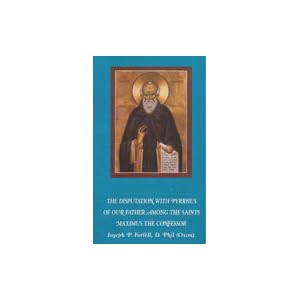
In regards to Christology, what stood out to me was a number of things. Some of which were:
201. Pyrrus: But the Fathers said this on the level of Theology and not on the level of Economy.113 Hence, no one who loveth the truth should change the appointed meaning of their statements which refer to Theology into statements that refer to the Economy, and therby introduce an absurdity.114
202. Maximus: If the Fathers say it of the Theology alone, then after the Incarnation it is not possible--so thou wouldst have us say -- to regard the Son as equally divine as the Father. And if it be not possible to regard Him as equally divine, then He hath no place in the invocation [of the Divine Name] at baptism. So both faith and preaching shall, in the last analysis, to be proven to be in vain.
203. And again, if it be not possible to regard the Son as equally divine with the Father after the Incarnation, then [how will these statements be explained]? "My Father worketh hitherto, and I work."115 Or "Whatever the Son seeth the Father doing, the Son doeth likewise"?116 Or "If ye believe not me, believe my works"?117
Or "The works which I do bear witness of me"?118 Or "For as the Father raiseth up the dead and quickeneth them, even so the Son quickeneth whom He will"?119 For all these prove that He was not only of the same essence as the Father after the Incarnation, but of the same energy as well.
204. And again, if the foreknowledge of beings be a divine energy, and if it be not only proper to the Father and the Spirit, but further, be also proper to the Son even after the Incarnation, then the Son is of the same energy after the Incarnation as the Father.
205. And again, if the miracles be a divine operation, and if we know from the miracles that He is of the same essence as the Father, then from the same energy He is shown to be of the same essence as the Father, and is to be regarded as equally divine [with Him] after the Incarnation [as He was before it].
206. And again, if the creative energy be an attribute proper to the essence of God, then the attributes of the essence are by necessity inseparable. S those who say that after then Incarnation He is not of the same energy as the Father also say that He is not of the same essence, for where the energy proper to a given nature is not found neither shall that nature be found. Conversely, those who say that He is of the same essence say that He is of the same energy as well, and regard Him to be equally divine [with the Father] after the Incarnation [as He was before it]. For wherever the natures is, there also is the energy proper to it, without diminution.
207. Pyrrhus: But we do not say "one energy" as a denial of human operation. It is said to be passable by opposition to the divine nature.120
208. Maximus: Then by the same principle those who say one nature do not say this as a denial of the humanity, but by this means oppose its passable character to the divine nature.
209. Pyrrhus: So? Did not the fathers define passibility by means of its difference from the divine operation [of impassibility]?
210. Maximus: God forbid! For no [father], ever defined an existence by comparison to its opposite or found the one to be the cause of the other. For if human passion is caused in such a manner by the divine energy, then doubtless human imperfection existeth because of the goodness of the divine nature. And the exact opposite may also then be stated: that through the passable human motion the divine energy existeth, and that because the human nature is evil, the divine nature is good. But enough of this! For such[conceptions are quite perverse.121
211. Pyrrhus: Why? Did the Fathers not designate passion as the human motion?
212. Maximus: Yes, but the spoke in various ways about these same propositions and conceptions.
213. Pyrrhus: How canst thou say this?
214. Maximus: They referred to the same thing as power, energy, distinctions, motion, property, quality, and passion, but not by opposition to the divine [energy]. Power they defined as that which maintaineth immutability, energy as that which characterizeth the same forms by indistinquishable productions, distinction as that which defineth a thing, motion as that which manifesteth, property as a component attributed only to one thing and not to another, quality as that which imparteth form, and passion as that which is moved. For all things that are from God and after God change by motion, for they are not self-moved beings of omnipotent power.122 Therefore, they cannot be defined by opposition, but only by means of the rational principle created and placed into them, which are the established causes in each thing.123
So[the human] energy is designated at the same time as the divine, for what else can one make of the expression "He operateth in the form of each of the two by the communion of each of the two"? Or "after He continued also for forty days fasting, He hungered, for He granted to nature when He so willed to enact those things proper to it?" Or of those who say either that there is a distinction of energy, or of those who say there are two energies, one, and another one?
___________________________________________________________
113 This would seem to explain why Pyrrhus persists in the literary spirit of St. Cyril of Alexandria, using physis in Theology and Economy differently, whereas St. Maximus, firmly within the Cyrillic Chalcedonian tradition, uses a consistent terminology, where the meanings of hypostasis and nature remain the same, whether referring to Triadology(i.e., Theology) or Christology(i.e., Economy).
114 Pyrrhus seems to object to the whole enterprise of Cyrillic Chalcedonianism itself, and to its (eventually successful) effort to use technical terms such as hypostasis and nature univocally in both Theology and Economy.
120 Pyrrhus' argument is dependent upon the Neoplatonic and Plotinian paradigm, which would define all distinctions by means of a dialectical opposition. cf. EnneadsIII:2:16,17:
"The All is in accordance with its rational formative pattern, and it is necessary that this one formative pattern should be one pattern made out of opposites, since it is opposition of this kind which gives it its structure, and, we might say, its existence..........distinction is opposition......the more it is differentiated the more opposed will it make the things it makes."(trans. A.H. Armstrong, Loeb Classical Library, No. 442, p.99)
121 Once again, St. Maximus' response is upon the implication of Pyrrhus' Neoplatonic dialectic which underwrites Monotheletism.
122 That is, created beings are self-moved, but not in the manner of God, with complete omnipotence, independence, and autonomy. In this sense, they are not "autonomous", which would be dualism, nor merely passive automatons in the face of an irresistible divine energy, which would be fatalism, nor are they mere emanations of the divine essence, which would be pantheism. rather, they are "semi-autonomous", i.e., precisely created, and therefore a uniquely different kind of being, with a different kind of free choice and activity, which nevertheless depended at all times on the divine will for their existence and activity.
123 That is, the nature of created beings is not defined by dialectical oppositions between them or between God, but by the distinguishing logoi in them.
pages 68 - 72 from the book The Disputation with Pyrrhus of our Father Among The Saints Maximus The Confessor. Translated from the greek by Joseph P. Farrel
Christ willed dually and not singly
The Disputation With Pyrrhus of Our Father Among the Saints Maximus the Confessor
7. Maximus: Yes, I truly do. For what is a more irreverent conception than that which maintains that the same person with the very same will, which before the Incarnation created everything from nothing and which maintains, provides, and orders everything for salvation, after the Incarnation desireth food and drink, changeth from one position to another, and performeth all manner of similar things that are free from blame and reproach, but which would by this means prove that the whole Economy of the Incarnation was not illusory?
8. Pyrrhus: But is Christ one or not?
9. Maximus: Yes, obviously He is one.
10. Pyrrhus: If Christ be one person, then He willed as one person. And if He willed as one person, then doubtless He hath one will, and not two.
11. Maximus: To state something and not first to distinquish the different meanings of what is being said invites confusion, and ensures that what is under investigation remains obscure, which is foreign to a man of learning. Therefore, explain this to me: If Christ be one, is He God only, or man only, or both together, God and man?
12. Pyrrhus: Obviously, God and man.
13. Maximus: Therefore, Christ existeth as God and as man by nature. Then did He will as God and as man, or only as Christ? If it were Christ who willed and initiated actions, being both God and man, then it is clear that, being one and the same, He willed dually and not singly. For if Christ be nothing else apart from the natures from which and in which He existeth, then obviously He willeth and operateth in a manner corresponding to each of his natures, in other words, as each nature is capable of operating. And if He hath two natures, then He surely must have two natural wills, the wills and essential operations being equal in number to the natures. For just as the number of natures of the one and the same Christ, correctly understood and explained, doth not divide Christ but rather preserveth the distinction of natures in the union, so likewise the number of essential attributes, wills, and operations attached to those two natures doth not divide Christ either. For throughout both of His natures there flowed the same activity and purpose, to witm our salvation. This introduceth no division -- God forbid! --but rather shows that they are preserved unimpaired, in their entirety, even in the union.
pages 3-5 from the book "The Disputation With Pyrrhus Of Our Father Among The Saints Maximus The Confessor" Translated from the Greek by Joseph P. Farrell
Wednesday, April 6, 2011
Christology

Christology Workshop by Dr. Jeffrey Macdonald
Part 1:
Play Audio
Part 2:
Play Audio
Part 3:
Play Audio
Power Point presentation:
Show Snapshots
A Personal Relationship with God
Credit to Mike Spring from Classical Christianity
I know that the Immovable comes down; I know that the Invisible appears to me; I know that He who is outside the whole creation Takes me within Himself and hides me in His arms, and then I find myself outside the whole world.- St. Simeon the New Theologian
I, a frail, small mortal in the world, behold the Creator of the world, all of Him, within myself;and I know that I shall not die, for I am within the Life, I have the whole of Life springing up as a fountain within me.
He is in my heart, He is in heaven: both there and here He shows himself to me with equal glory.
Friday, March 25, 2011
Why I'm Writing a Book
TOTAL DEPRAVITY
Barnabas (A.D. 70): "Learn: before we believed in God, the habitation of our heart was corrupt and weak."
Ignatius (A.D. 110): "They that are carnal cannot do the things that are spiritual... Nor can the unbelievers do the things of belief."
Justin Martyr (A.D. 150): "Mankind by Adam fell under death, and the deception of the serpent; we are born sinners... No good thing dwells in us... For neither by nature, nor by human understanding is it possible for me to acquire the knowledge of things so great and so divine, but by the energy of the Divine Spirit... Of ourselves it is impossible to enter the kingdom of God... He has convicted us of the impossibility of our nature to obtain life... Free will has destroyed us; we who were free are become slaves and for our sin are sold... Being pressed down by our sins, we cannot move upward toward God; we are like birds who have wings, but are unable to fly."
Clement Of Alexandria (A.D. 190): "The soul cannot rise nor fly, nor be lifted up above the things that are on high, without special grace."
Origen: "Our free will... or human nature is not sufficient to seek God in any man."
Eusebius (A.D. 330): "The liberty of our will in choosing things that are good is destroyed."
Augustine (A.D. 370): "If, therefore, they are servants of sin (2 Cor. 3:17), why do they boast of free will?... O, man! Learn from the precept what you ought to do; learn from correction, that it is your own fault you have not the power... Let human effort, which perished by Adam, here be silent, and let the grace of God reign by Jesus Christ... What God promises, we ourselves do not through free will of human nature, but He Himself does by grace within us... Men labor to find in our own will something that is our own, and not God's; how can they find it, I know not."
As you can see, they provide zero links directly to the Fathers and early Christian witnesses themselves. I don't think they want people to actually read them in context. And so I'm working on a book. It started out as a paper in response to several of my Christian hip-hop Calvinistic friends, but it's turning into a book. Below are some quotes of some of the Fathers and early Christian witnesses that they won't quote. And unlike a number of Calvinistic websites out there, I give direct links for all to see.
If we start with their belief about Free Will, then the rest should fall into place:
FREE WILL
Saint Ignatius (110 A.D.)
"For when ye are desirous to do well, God is also ready to assist you."
Saint Justin Martyr (150 A.D.)
"But lest some suppose, from what has been said by us, that we say that whatever happens, happens by a fatal necessity, because it is foretold as known beforehand, this too we explain. We have learned from the prophets, and we hold it to be true, that punishments, and chastisements, and good rewards, are rendered according to the merit of each man’s actions. Since if it be not so, but all things happen by fate, neither is anything at all in our own power. For if it be fated that this man, e.g., be good, and this other evil, neither is the former meritorious nor the latter to be blamed. And again, unless the human race have the power of avoiding evil and choosing good by free choice, they are not accountable for their actions, of whatever kind they be. But that it is by free choice they both walk uprightly and stumble, we thus demonstrate. We see the same man making a transition to opposite things. Now, if it had been fated that he were to be either good or bad, he could never have been capable of both the opposites, nor of so many transitions. But not even would some be good and others bad, since we thus make fate the cause of evil, and exhibit her as acting in opposition to herself; or that which has been already stated would seem to be true, that neither virtue nor vice is anything, but that things are only reckoned good or evil by opinion; which, as the true word shows, is the greatest impiety and wickedness. But this we assert is inevitable fate, that they who choose the good have worthy rewards, and they who choose the opposite have their merited awards. For not like other things, as trees and quadrupeds, which cannot act by choice, did God make man: for neither would he be worthy of reward or praise did he not of himself choose the good, but were created for this end; nor, if he were evil, would he be worthy of punishment, not being evil of himself, but being able to be nothing else than what he was made."
Tatian (160 A.D.)
"How, then, shall I admit this nativity according to Fate, when I see such managers of Fate? I do not wish to be a king; I am not anxious to be rich; I decline military command; I detest fornication; I am not impelled by an insatiable love of gain to go to sea; I do not contend for chaplets; I am free from a mad thirst for fame; I despise death; I am superior to every kind of disease; grief does not consume my soul. Am I a slave, I endure servitude. Am I free, I do not make a vaunt of my good birth. I see that the same sun is for all, and one death for all, whether they live in pleasure or destitution. The rich man sows, and the poor man partakes of the same sowing. The wealthiest die, and beggars have the same limits to their life. The rich lack many things, and are glorious only through the estimation they are held in; but the poor man and he who has very moderate desires, seeking as he does only the things suited to his lot, more easily obtains his purpose. How is it that you are fated to be sleepless through avarice? Why are you fated to grasp at things often, and often to die? Die to the world, repudiating the madness that is in it. Live to God, and by apprehending Him lay aside your old nature. We were not created to die, but we die by our own fault. Our free-will has destroyed us; we who were free have become slaves; we have been sold through sin. Nothing evil has been created by God; we ourselves have manifested wickedness; but we, who have manifested it, are able again to reject it."
Saint Irenaeus (180 A.D.)
"They will find in our dispensation, that "many are called, but few chosen"; and that there are those who inwardly are wolves, yet wear sheep’s clothing in the eyes of the world (foris); and that God has always preserved freedom, and the power of self-government in man, while at the same time He issued His own exhortations, in order that those who do not obey Him should be righteously judged (condemned) because they have not obeyed Him; and that those who have obeyed and believed on Him should be honoured with immortality."
Saint Irenaeus (180 A.D.)
"For He who makes the chaff and He who makes the wheat are not different persons, but one and the same, who judges them, that is, separates them. But the wheat and the chaff, being inanimate and irrational, have been made such by nature. But man, being endowed with reason, and in this respect like to God, having been made free in his will, and with power over himself, is himself the cause to himself, that sometimes he becomes wheat, and sometimes chaff."
Saint Irenaeus (180 A.D.)
"God therefore has given that which is good, as the apostle tells us in this Epistle, and they who work it shall receive glory and honour, because they have done that which is good when they had it in their power not to do it; but those who do it not shall receive the just judgment of God, because they did not work good when they had it in their power so to do. 2. But if some had been made by nature bad, and others good, these latter would not be deserving of praise for being good, for such were they created; nor would the former be reprehensible, for thus they were made [originally]. But since all men are of the same nature, able both to hold fast and to do what is good; and, on the other hand, having also the power to cast it from them and not to do it,—some do justly receive praise even among men who are under the control of good laws (and much more from God), and obtain deserved testimony of their choice of good in general, and of persevering therein; but the others are blamed, and receive a just condemnation, because of their rejection of what is fair and good. And therefore the prophets used to exhort men to what was good, to act justly and to work righteousness, as I have so largely demonstrated, because it is in our power so to do, and because by excessive negligence we might become forgetful, and thus stand in need of that good counsel which the good God has given us to know by means of the prophets."
Clement of Alexandria (195 A.D.)
"Whether, then, the Father Himself draws to Himself everyone who has led a pure life, and has reached the conception of the blessed and incorruptible nature; or whether the free-will which is in us, by reaching the knowledge of the good, leaps and bounds over the barriers, as the gymnasts say; yet it is not without eminent grace that the soul is winged, and soars, and is raised above the higher spheres, laying aside all that is heavy, and surrendering itself to its kindred element."
Clement of Alexandria (195 A.D.)
"Notwithstanding then since to obey or not is in our own power, provided we have not the excuse of ignorance to adduce. He makes a just call, and demands of each according to his strength. For some are able as well as willing, having reached this point through practice and being purified; while others, if they are not yet able, already have the will."
Clement of Alexandria (195 A.D.)
"But application to the training of ourselves, and subjection to the commandments, is in our own power; with which if we will have nothing to do, by abandoning ourselves wholly to lust, we shall sin, nay rather, wrong our own soul."
Clement of Alexandria (195 A.D.)
"And as the physician ministers health to those who co-operate with him in order to health, so also God ministers eternal salvation to those who co-operate for the attainment of knowledge and good conduct; and since what the commandments enjoin are in our own power, along with the performance of them, the promise is accomplished."
Tertullian (207 A.D.)
"I find, then, that man was by God constituted free, master of his own will and power; indicating the presence of God’s image and likeness in him by nothing so well as by this constitution of his nature. For it was not by his face, and by the lineaments of his body, though they were so varied in his human nature, that he expressed his likeness to the form of God; but he showed his stamp in that essence which he derived from God Himself (that is, the spiritual, which answered to the form of God), and in the freedom and power of his will. This his state was confirmed even by the very law which God then imposed upon him. For a law would not be imposed upon one who had it not in his power to render that obedience which is due to law; nor again, would the penalty of death be threatened against sin, if a contempt of the law were impossible to man in the liberty of his will. So in the Creator’s subsequent laws also you will find, when He sets before man good and evil, life and death, that the entire course of discipline is arranged in precepts by God’s calling men from sin, and threatening and exhorting them; and this on no other ground than that man is free, with a will either for obedience or resistance."
Origen (225 A.D.)
"But as the preaching of the Church includes a belief in a future and just judgment of God, which belief incites and persuades men to a good and virtuous life, and to an avoidance of sin by all possible means; and as by this it is undoubtedly indicated that it is within our own power to devote ourselves either to a life that is worthy of praise, or to one that is worthy of censure, I therefore deem it necessary to say a few words regarding the freedom of the will, seeing that this topic has been treated by very many writers in no mean style. And that we may ascertain more easily what is the freedom of the will, let us inquire into the nature of will and of desire."
Origen (225 A.D.)
"The result of our reasoning, therefore, is to show that those things which happen to us from without are not in our own power; but that to make a good or bad use of those things which do so happen, by help of that reason which is within us, and which distinguishes and determines how these things ought to be used, is within our power."
Origen (225 A.D.)
"In the Psalm, too, it is written: “If My people had heard Me, if Israel had walked in My ways, I would have humbled her enemies to nothing;” by which he shows that it was in the power of the people to hear, and to walk in the ways of God. The Saviour also saying, “I say unto you, Resist not evil;” and, “Whoever shall be angry with his brother, shall be in danger of the judgment;” and, “Whosoever shall look upon a woman to lust after her, hath already committed adultery with her in his heart;” and in issuing certain other commands,—conveys no other meaning than this, that it is in our own power to observe what is commanded. And therefore we are rightly rendered liable to condemnation if we transgress those commandments which we are able to keep. And hence He Himself also declares: “Every one who hears my words, and doeth them, I will show to whom he is like: he is like a wise man who built his house upon a rock,” etc. So also the declaration: “Whoso heareth these things, and doeth them not, is like a foolish man, who built his house upon the sand,” etc. Even the words addressed to those who are on His right hand, “Come unto Me, all ye blessed of My Father,” etc.; “for I was an hungered, and ye gave Me to eat; I was thirsty, and ye gave Me drink,” manifestly show that it depended upon themselves, that either these should be deserving of praise for doing what was commanded and receiving what was promised, or those deserving of censure who either heard or received the contrary, and to whom it was said, “Depart, ye cursed, into everlasting fire.” Let us observe also, that the Apostle Paul addresses us as having power over our own will, and as possessing in ourselves the causes either of our salvation or of our ruin: “Dost thou despise the riches of His goodness, and of His patience, and of His long-suffering, not knowing that the goodness of God leadeth thee to repentance? But, according to thy hardness and impenitent heart, thou art treasuring up for thyself wrath on the day of judgment and of the revelation of the just judgment of God, who will render to every one according to his work: to those who by patient continuance in well-doing seek for glory and immortality, eternal life; while to those who are contentious, and believe not the truth, but who believe iniquity, anger, indignation, tribulation, and distress, on every soul of man that worketh evil, on the Jew first, and (afterwards) on the Greek; but glory, and honour, and peace to every one that doeth good, to the Jew first, and (afterwards) to the Greek.” You will find also innumerable other passages in holy Scripture, which manifestly show that we possess freedom of will. Otherwise there would be a contrariety in commandments being given us, by observing which we may be saved, or by transgressing which we may be condemned, if the power of keeping them were not implanted in us."
Origen (225 A.D.)
"If, then, God promises to do this, and if, before He takes away the stony heart, we are unable to remove it from ourselves, it follows that it is not in our power, but in God’s only, to cast away wickedness. And again, if it is not our doing to form within us a heart of flesh, but the work of God alone, it will not be in our power to live virtuously, but it will in everything appear to be a work of divine grace. Such are the assertions of those who wish to prove from the authority of Holy Scripture that nothing lies in our own power. Now to these we answer, that these passages are not to be so understood, but in the following manner. Take the case of one who was ignorant and untaught, and who, feeling the disgrace of his ignorance, should, driven either by an exhortation from some person, or incited by a desire to emulate other wise men, hand himself over to one by whom he is assured that he will be carefully trained and competently instructed. If he, then, who had formerly hardened himself in ignorance, yield himself, as we have said, with full purpose of mind to a master, and promise to obey him in all things, the master, on seeing clearly the resolute nature of his determination, will appropriately promise to take away all ignorance, and to implant knowledge within his mind; not that he undertakes to do this if the disciple refuse or resist his efforts, but only on his offering and binding himself to obedience in all things. So also the Word of God promises to those who draw near to Him, that He will take away their stony heart, not indeed from those who do not listen to His word, but from those who receive the precepts of His teaching; as in the Gospels we find the sick approaching the Saviour, asking to receive health, and thus at last be cured. And in order that the blind might be healed and regain their sight, their part consisted in making supplication to the Saviour, and in believing that their cure could be effected by Him; while His part, on the other hand, lay in restoring to them the power of vision. And in this way also does the Word of God promise to bestow instruction by taking away the stony heart, i.e., by the removal of wickedness, that so men may be able to walk in the divine precepts, and observe the commandments of the law."
Saint Hippolytus (225 A.D.)
"But God, who created it, did not, nor does not, make evil. He makes what is glorious and excellent; for He who makes it is good. Now man, that was brought into existence, was a creature endued with a capacity of self-determination, yet not possessing a sovereign intellect, nor holding sway over all things by reflection, and authority, and power, but a slave to his passions, and comprising all sorts of contrarieties in himself. But man, from the fact of his possessing a capacity of self-determination, brings forth what is evil, that is, accidentally; which evil is not consummated except you actually commit some piece of wickedness. For it is in regard of our desiring anything that is wicked, or our meditating upon it, that what is evil is so denominated. Evil had no existence from the beginning, but came into being subsequently. Since man has free will, a law has been defined for his guidance by the Deity, not without answering a good purpose. For if man did not possess the power to will and not to will, why should a law be established? For a law will not be laid down for an animal devoid of reason, but a bridle and a whip; whereas to man has been given a precept and penalty to perform, or for not carrying into execution what has been enjoined. For man thus constituted has a law been enacted by just men in primitive ages. Nearer our own day was there established a law, full of gravity and justice, by Moses, to whom allusion has been already made, a devout man, and one beloved of God."
Saint Hippolytus (225 A.D.)
"This Logos we know to have received a body from a virgin, and to have remodelled the old man by a new creation. And we believe the Logos to have passed through every period in this life, in order that He Himself might serve as a law for every age, and that, by being present (amongst) us, He might exhibit His own manhood as an aim for all men. And that by Himself in person He might prove that God made nothing evil, and that man possesses the capacity of self-determination, inasmuch as he is able to will and not to will, and is endued with power to do both. This Man we know to have been made out of the compound of our humanity. For if He were not of the same nature with ourselves, in vain does He ordain that we should imitate the Teacher. For if that Man happened to be of a different substance from us, why does He lay injunctions similar to those He has received on myself, who am born weak; and how is this the act of one that is good and just? In order, however, that He might not be supposed to be different from us, He even underwent toil, and was willing to endure hunger, and did not refuse to feel thirst, and sunk into the quietude of slumber. He did not protest against His Passion, but became obedient unto death, and manifested His resurrection. Now in all these acts He offered up, as the first-fruits, His own manhood, in order that thou, when thou art in tribulation, mayest not be disheartened, but, confessing thyself to be a man (of like nature with the Redeemer), mayest dwell in expectation of also receiving what the Father has granted unto this Son."
Saint Cyprian (250 A.D.)
"That the liberty of believing or of not believing is placed in free choice.
In Deuteronomy: “Lo, I have set before thy face life and death, good and evil. Choose for thyself life, that thou mayest live.” Also in Isaiah: “And if ye be willing, and hear me, ye shall eat the good of the land. But if ye be unwilling, and will not hear me, the sword shall consume you. For the mouth of the Lord hath spoken these things.” Also in the Gospel according to Luke: “The kingdom of God is within you.”"
Saint Cyprian (250 A.D.)
"That every one is tempted so much as he is able to bear.
In the first Epistle of Paul to the Corinthians: “No temptation shall take you, except such is human. But God is faithful, who will not suffer you to be tempted above that ye are able; but will with the temptation also make a way to escape, that ye may be able to bear it.”"
Arnobius (305 A.D.)
"But, my opponents ask, if Christ came as the Saviour of men, as you say, why does He not, with uniform benevolence, free all without exception? I reply, does not He free all alike who invites all alike? or does He thrust back or repel any one from the kindness of the Supreme who gives to all alike the power of coming to Him,—to men of high rank, to the meanest slaves, to women, to boys? To all, He says, the fountain of life is open, and no one is hindered or kept back from drinking. If you are so fastidious as to spurn the kindly offered gift, nay, more, if your wisdom is so great that you term those things which are offered by Christ ridiculous and absurd, why should He keep on inviting you, while His only duty is to make the enjoyment of His bounty depend upon your own free choice?"
Methodius of Olympus (311 A.D.)
"Because there is nothing evil by nature, but it is by use that evil things become such. So I say, says he, that man was made with a free-will, not as if there were already evil in existence, which he had the power of choosing if he wished, but on account of his capacity of obeying or disobeying God.
For this was the meaning of the gift of Free Will. And man after his creation receives a commandment from God; and from this at once rises evil, for he does not obey the divine command; and this alone is evil, namely, disobedience, which had a beginning.
For man received power, and enslaved himself, not because he was overpowered by the irresistible tendencies of his nature, nor because the capacity with which he was gifted deprived him of what was better for him; for it was for the sake of this that I say he was endowed with it (but he received the power above mentioned), in order that he may obtain an addition to what he already possesses, which accrues to him from the Superior Being in consequence of his obedience, and is demanded as a debt from his Maker. For I say that man was made not for destruction, but for better things. For if he were made as any of the elements, or those things which render a similar service to God, he would cease to receive a reward befitting deliberate choice, and would be like an instrument of the maker; and it would be unreasonable for him to suffer blame for his wrong-doings, for the real author of them is the one by whom he is used. But man did not understand better things, since he did not know the author (of his existence), but only the object for which he was made. I say therefore that God, purposing thus to honour man, and to grant him an understanding of better things, has given him the power of being able to do what he wishes, and commends the employment of his power for better things; not that He deprives him again of free-will, but wishes to deprives him again of free-will, but wishes to point out the better way. For the power is present with him, and he receives the commandment; but God exhorts him to turn his power of choice to better things. For as a father exhorts his son, who has power to learn his lessons, to give more attention to them inasmuch as, while he points out this as the better course, he does not deprive his son of the power which he possessed, even if he be not inclined to learn willingly; so I do not think that God, while He urges on man to obey His commands, deprives him of the power of purposing and withholding obedience. For He points out the cause of His giving this advice, in that He does not deprive him of the power. But He gives commands, in order that man may be able to enjoy better things. For this is the consequence of obeying the commands of God. So that He does not give commands in order to take away the power which He has given, but in order that a better gift may be bestowed, as to one worthy of attaining greater things, in return for his having rendered obedience to God, while he had power to withhold it. I say that man was made with free-will, not as if there were already existing same evil, which he had the power of choosing if he wished, ... but that the power of obeying and disobeying God is the only cause."
Archelaus (320 A.D.)
"The judges said: He has given demonstration enough of the origin of the devil. And as both sides admit that there will be a judgment, it is necessarily involved in that admission that every individual is shown to have free-will; and since this is brought clearly out, there can be no doubt that every individual, in the exercise of his own proper power of will, may shape his course in whatever direction he pleases."
Also, I've noticed that I'm not alone in trying to fight this. Our friend Maximus Scott over at Classical Christianity was tackling this issue at the same time I was. And he is doing a great job at gathering quotes.
I've noticed the Holiness Movement Arminians doing something similar. They are working on a movie/documentary called Beyond Augustine:
Sunday, March 20, 2011
Second Sunday of Lent: Saint Gregory Palamas, Apophatic Theology, and the Essence vs. Energies Distinction
Metropolitan Kallistos Ware talks about Saint Gregory Palamas, Apophatic Theology,
and the Essence vs. Energies Distinction
Apophatic Theology
Audio:
St. Gregory Palamas - 2nd Sunday of Lent, by Fr. Thomas Hopko
God: Essence and Energies, by Kevin Allen, Steve McMeans, and Dr. David Bradshaw, professor of Philosophy and the Philosophy of Religion at the University of Kentucky.
Articles:
The Bradshaw Papers, by Dr. David Bradshaw
The Concept of Divine Energies, by Dr. David Bradshaw
The Distinction Between Essence and Energies and its Importance for Theology, by Christos Yannaras
Chapters 68-76 from the One Hundred and Fifty Chapters, by St. Gregory Palamas
Notes on the Palamite Controversy, by John S. Romanides
Sunday, March 13, 2011
Holy Scripture and the Church
"Christ founded the Church. The Church existed even when there was not yet a single book of New Testament Scripture. The books of the New Testament were written by the Apostles later, over the course of more than half a century after the beginning of the historical existence of the Church. In the books written by them, the Apostles left behind testimony of their oral preaching of the Gospel. They wrote for a Church already in existence, and entrusted their books to the Church to serve as perpetual edification. It is evident that the books of Holy Scripture do not constitute the essence of Christianity, since Christianity itself is not a teaching but a new life, established in mankind by the Holy Spirit on the basis of the Incarnation of the Son of God. Thus, it would not be impertinent to say that it is not by Holy Scripture, as a book, that man is saved, but by the grace of the Holy Spirit, Who lives in the Church. The Church guides people to perfection. In the Church there are also other ways, other means to that effect, besides the books of Holy Scripture. St. Irenaeus of Lyons writes: “Many nations of those barbarians who believe in Christ” have “salvation written in their hearts by the Spirit, without paper or ink, carefully preserving the ancient tradition... Those who, in the absence of written documents, have believed this faith, are barbarians, so far as regards our language; but as regards doctrine, manner, and tenor of life, they are, because of faith, very wise indeed; and they do please God, ordering their conversation in all righteousness, chastity, and wisdom.” In order to become a follower of a particular philosophical school it is necessary to assimilate the philosophical works by the father of that school. But is it sufficient to know the New Testament in order to become a Christian? Would this knowledge be enough for salvation? Certainly not. It is possible to know the entire New Testament by heart, it is possible to know perfectly the entire teaching of the New Testament, and still be very, very far from salvation. For salvation it is necessary to be added to the Church, just as it is said in the Book of Acts that those who were being saved were added to the Church (cf. Acts 2:47; 5:13–14). This was when there were no Scriptures, but there was the Church, and there were those who were being saved. Why was it essential to be added to the Church? It is because special grace-bearing power is needed for salvation, and this power can only be possessed by those who participate in the life of the Church, in the life of the single and indivisible Body of Christ. The grace-filled power of the Holy Spirit acts in the Church in many different ways: in the Mysteries and rites of the Church, in common prayer and mutual love, in church services; and, as the divinely inspired Word of God, it also operates through the books of Holy Scripture. Here we are coming close to the definition of Holy Scripture. The books of Holy Scripture are one of the means in the Church through which the grace-filled power of God acts upon people. The Spirit of God gives life only to the body of the Church, and therefore Holy Scripture can have meaning and significance only within the Church. “Flee to the Church, and be brought up in her bosom, and be nourished with the Lord’s Scriptures. For the Church has been planted [like a Paradise] in this world; therefore says the Spirit of God, Of every tree of the garden thou mayest freely eat (Gen. 2:16), that is, Eat ye from every Scripture of the Lord.” Thus, Holy Scripture is one of the manifestations of the common grace-filled life of the Church. Holy Scripture is the property of the Church, precious and priceless, but precisely the Church’s property. Holy Scripture cannot be torn away from the overall life of the Church. Only the Church gives meaning to the existence of Scripture. Holy Scripture is not an independent quantity; it cannot be considered a law given to the Church that she can fulfill and from which she can deviate. Holy Scripture arose in the midst of the Church and for the sake of the Church. The Church possesses Holy Scripture and uses it for the benefit of her members."
New Hieromartyr Hilarion (Troitsky), Archbishop of Verey,
Holy Scripture and the Church
Holy Scripture and the Church
Subscribe to:
Posts (Atom)

LORD JESUS CHRIST,
SON OF GOD,
HAVE MERCY ON US,
THE SINNERS.

Subscribe To


 Posts
All Comments
Posts
All Comments