Showing posts with label Apocrypha. Show all posts
Showing posts with label Apocrypha. Show all posts
Saturday, February 26, 2011
Orthodox Family Values
2 Maccabees 7:20 But the mother was marvellous above all, and worthy of honourable memory: for when she saw her seven sons slain within the space of one day, she bare it with a good courage, because of the hope that she had in the Lord. 21 Yea, she exhorted every one of them in her own language, filled with courageous spirits; and stirring up her womanish thoughts with a manly stomach, she said unto them: 22 I cannot tell how ye came into my womb: for I neither gave you breath nor life, neither was it I that formed the members of every one of you; 23 But doubtless the Creator of the world, who formed the generation of man, and found out the beginning of all things, will also of his own mercy give you breath and life again, as ye now regard not your own selves for his laws' sake. 28 I beseech thee, my son, look upon the heaven and the earth, and all that is therein, and consider that God made them of things that were not; and so was mankind made likewise. 29 Fear not this tormentor, but, being worthy of thy brethren, take thy death that I may receive thee again in mercy with thy brethren. 41 Last of all after the sons the mother died.
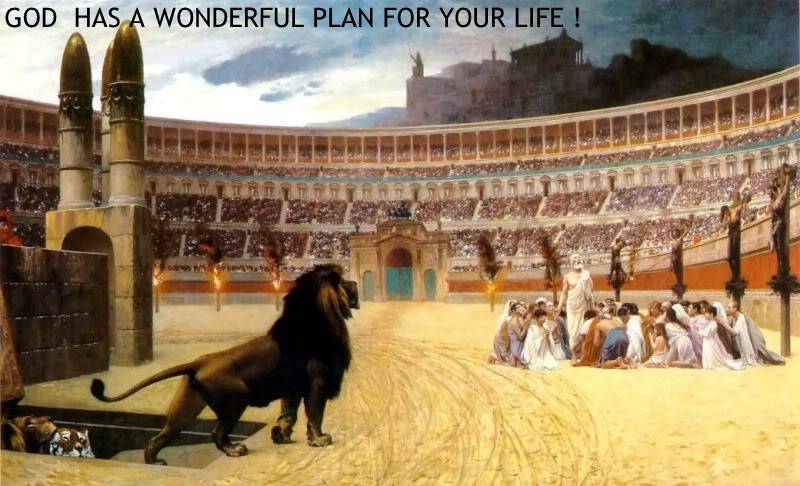
Orthodoxy: providing a safe and secure family-friendly environment since 170 BC
Monday, August 9, 2010
When Did Rabbinical Jews "Officially" Reject the Deuterocanon?
For those that don't know what the term "deuterocanon" mean. It's the historical ussage for what many puritan protestants and some secularists call "Apocrypha". These books weren't really called "Apocrypha" by most Christians in the past. It is true that some did call these books apocrypha, but this is mostly seen in the west from the 5th century on. Before the time of Jerome these books were never called "Apocrypha".
The word "deuterocanon" simply means "secondary". Or the secondary order of books. The historical title for the other set of books is "protocanon". Which means, "primary", or the Primary order of books. Some Orthodox Scholars prefer not to use the term "Deuterocanon" because that is a western Roman Catholic term. But whatever the case, in varying degrees, the Church has always embraced at least some of these books as scripture.
So when did the nonbelieving Jews officially reject the "Deuterocanon"?
Well, in 135 A.D. "Akiba ben Joseph" was made head of the Academy of Jamnia. It was under his influence that the Jews "officially" rejected the Deuto-canon.
He supported "Bar kochba" by calling him the Jewish Messiah. The christians refused to see him as the Messiah and thus the hatred for the Deuto-canon and New Testament books. According to Wiki....and no....I don't really like wicki, and I reject their cynicism in thinking Akiba didn't really support Bar Kocka in the rebellion.....but one thing they did include was his dislike for Christianity and the D.C.'s
http://en.wikipedia.org/wiki/Akiba_ben_Joseph
As quoted from wicki:
And in Michuta's book he says:
pages 68-70 from the book "Why Catholic Bibles are Bigger: the untold Story of the lost books of the Protestant Bible" by Gary G. Michuta
Alot of christians in America don't know this particular theory or interpretation of history. I know I didn't until a few years ago. Before then I was told that a Jewish rabbinical council of Jamnia of either 70 A.D. or 90 A.D. rejected these books. But it seems as if officially such a thing probably didn't happen until some decades later. The truth is, the Jews didn't have church councils in the way that Christians did. So there was never really a Jewish council of Jamnia. Jamnia was a Jewish school. A type of rabbinical Academy, so it would be more accurate to call it, the Academy of Jamnia. The first person to call it a "synod" was the Jewish historian H. Graetz(1817-1891). Some christians who read his work speculated it was a jewish version of a christian church council.
And this is where the whole "council of Jamnia of 90 A.D." comes from. It comes from speculation. The sources that we do have about that time never mentions anything about any books being taken out of a canon. Most of the debates was around the Book of Ecclesiastes and maybe the Song of Songs. This Jamnia assembly didn't lay down the limits of the Old Testament canon.
Therefore, in regards to Jamnia, it is more accurate to point to what happened around 135 A.D. for this is when the Jamnia rabbinical school officially rejected not only the deuteros, but also the christian Gospels.
Jnorm
The word "deuterocanon" simply means "secondary". Or the secondary order of books. The historical title for the other set of books is "protocanon". Which means, "primary", or the Primary order of books. Some Orthodox Scholars prefer not to use the term "Deuterocanon" because that is a western Roman Catholic term. But whatever the case, in varying degrees, the Church has always embraced at least some of these books as scripture.
So when did the nonbelieving Jews officially reject the "Deuterocanon"?
Well, in 135 A.D. "Akiba ben Joseph" was made head of the Academy of Jamnia. It was under his influence that the Jews "officially" rejected the Deuto-canon.
He supported "Bar kochba" by calling him the Jewish Messiah. The christians refused to see him as the Messiah and thus the hatred for the Deuto-canon and New Testament books. According to Wiki....and no....I don't really like wicki, and I reject their cynicism in thinking Akiba didn't really support Bar Kocka in the rebellion.....but one thing they did include was his dislike for Christianity and the D.C.'s
http://en.wikipedia.org/wiki/Akiba_ben_Joseph
As quoted from wicki:
"He has, however, no objection to the private reading of the
Apocrypha, as is evident from the fact that he himself makes frequent use of
Ecclesiasticus (W. Bacher, Ag. Tan. i. 277; H. Grätz, Gnosticismus, p. 120).
Akiba stoutly defended, however, the canonicity of the Song of Songs, and Esther
(Yad. iii.5, Meg. 7a). Grätz's statements (Shir ha-Shirim, p. 115, and Kohelet,
p. 169) respecting Akiba's attitude toward the canonicity of the Song of Songs
are misconceptions, as I.H. Weiss (Dor, ii. 97) has to some extent shown. To the
same motive underlying his antagonism to the Apocrypha, namely, the desire to
disarm Christians—especially Jewish Christians—who drew their "proofs" from the
Apocrypha, must also be attributed his wish to emancipate the Jews of the
Dispersion from the domination of the Septuagint, the errors and inaccuracies in
which frequently distorted the true meaning of Scripture, and were even used as
arguments against the Jews by the Christians."
And in Michuta's book he says:
"The first revolt(of 70 A.D.) was a national uprising; this
second Revolt(around 135 A.D. or maybe 150 A.D.) would be a messianic movement.
By means of Akiba's work, a large number of jews joined in the rebellion. Even
Samaritans and pagans joined Bar Cochba in his revolt. However, there was one
Jewish sect which refused to join: that obstinate tribe known as christians. The
Christians, a majority of whom were still ethnically jewish, were pressed to
join in this life and death struggle with Rome, but they refused. To accept bar
Cochba as Messiah, as Akiba insisted, would have been nothing short of Apostasy;
and because of their refusal to do so, Christians were treated by the Jews as
heretics and traitors. It is this same Rabbi Akiba who is the very first writer
to explicity and forthrightly reject the inspiration of both the christian New
Testament and the books of the Deuterocanon. Akiba's declaration is found in
Tosefta Yahayim 2:13 which reads;
"The Gospel and heretical books do not
defile the hands. The books of Ben Sira and all other books written from then
on, do not defile the hands."
Two outstanding points must be drawn from
this impious declaration: first, it must have been common knowledge even at this
early date that the christians accepted the Deutercanon and used it as Scripture
(along with the Gospels), otherwise, there would have been no need to rule
against them; secondly that at least some jews must also have shared that
acceptance, otherwise Akiba's decree would have been superfluous."
Here we
have a hostile witness confirming through his actions that the earliest
christians accepted both the Gospels and the Deuterocanon as inspired and sacred
Scripture. It was in this watershed event- the naming of the false Messiah Bar
Cochba and the Anathematizing of those who rejected him- which occasioned the
very first unquestionable rejection of the Deuteros by a single, widely
recognized Jewish authority. It was under Akiba's tenure that a single textual
tradition of the Old Testament was first adopted; before this time (as we have
shown) a variety of different texts were in use among the jews. It was here,
sometime in the middle of the second Christian century, that Judaism first
adopted an official normative text(i.e. the Masoretic Text or the MT).
pages 68-70 from the book "Why Catholic Bibles are Bigger: the untold Story of the lost books of the Protestant Bible" by Gary G. Michuta
Alot of christians in America don't know this particular theory or interpretation of history. I know I didn't until a few years ago. Before then I was told that a Jewish rabbinical council of Jamnia of either 70 A.D. or 90 A.D. rejected these books. But it seems as if officially such a thing probably didn't happen until some decades later. The truth is, the Jews didn't have church councils in the way that Christians did. So there was never really a Jewish council of Jamnia. Jamnia was a Jewish school. A type of rabbinical Academy, so it would be more accurate to call it, the Academy of Jamnia. The first person to call it a "synod" was the Jewish historian H. Graetz(1817-1891). Some christians who read his work speculated it was a jewish version of a christian church council.
And this is where the whole "council of Jamnia of 90 A.D." comes from. It comes from speculation. The sources that we do have about that time never mentions anything about any books being taken out of a canon. Most of the debates was around the Book of Ecclesiastes and maybe the Song of Songs. This Jamnia assembly didn't lay down the limits of the Old Testament canon.
Therefore, in regards to Jamnia, it is more accurate to point to what happened around 135 A.D. for this is when the Jamnia rabbinical school officially rejected not only the deuteros, but also the christian Gospels.
Jnorm
The Book of Wisdom & Early Christians
Most of these quotes are about the book of Wisdom. One or two are about Sirach or one of the other D.C.'s. When one reads the works of the Early Church, you will notice that there is no distinction made in most of their writings between D.C.'s & P.C.'s. Also they often used these books to talk about doctrine. This is something Puritan Protestants reject, but this is something early Christians did. So if someone comes to you and tells you that they know that the eary Christians quoted from the D.C.'s, but that doesn't mean they saw them as scripture. Then you ask that person if it's ok to use the D.C.'s when talking about "Doctrine"? Or to settle a dispute in Doctrine? If they say no, then you tell them that early Christians used these books to settle issues of Doctrine, and that most of them didn't see a distinction between the D.C.'s & P.C.'s. And many of these books were read in the Churches........ So yes, most of them did see these books as scripture.
“What synagogue of wicked men encompasses me [Ps. 22:16b], they surround me as bees around honey [Ps. 118:12a], and for my garments they cast lots [Ps. 22:18b].
7. Thus, since he was about to be manifested in flesh and to suffer, his passion was revealed beforehand. 7b. For the prophet says concerning Israel:
Who to them, for they devised a wicked plot against themselves when they said, “Let us bind the Righteous One, for he is displeasing to us” [Isa. 3:9b-10a; see Wisd. 2:12]. Barnabas (70 A.D.) page 277 “The Apostolic Fathers” edited by Jack N. Sparks
“Both the Virginity of Mary and her giving birth escaped the notice of the prince of this age, as did the Lord’s death-three mysteries of a cry, wrought in the stillness of God. 2 How then was he made manifest to the ages? A star shone forth in heaven brighter than all the stars, and its light was ineffable and its novelty produced astonishment; all the other stars, with sun and moon, gathered in chorus about this star, and it outshone them all [cf. Wisd. 7:29,30; 18:14,15]. There was perplexity as to the origin of this novelty, so unlike the others. 3. Thus all magic was dissolved and every bond of wickedness [cf. Isa. 58:6] vanished; ignorance was abolished and the old kingdom was destroyed, since God was becoming manifest in human form for the newness of eternal life [cf. Rom. 6:4]; what had been prepared by God [cf. 1 Cor. 2:9] had its beginning. Hence everything was shaken together, for the abolition of death was being planned." Ignatius (110 A.D.) page 83 “The letters of Ignatius of Antioch Ephesians” “The Apostolic Fathers”, edited by Jack N. Sparks
“Having this hope, then, let our souls be bound to him who is faithful to his promises [cf. Heb. 10:23] and just in his judgments. 2. He it is who commanded us not to lie: how much the more will he not lie himself! For the one thing that is impossible to god is to be false [cf. Heb. 6:18]. 3. Let our faith in him then be rekindled in us, and bear in mind that all things are near him. 4. By the word of his majesty he established all things, and by his word he can bring them to nought. 5. “Who will say to him, “What have you done?’ Or who can stand against the might of his power?” [Wisd. 12:12; 11:22]. When he wills and as he wills he shall accomplished all things, and not one of the things he has decreed can fail. 6. All things lie open to his sight, and nothing has escaped his will, 7. since “the heavens are telling the glory of God, and the firmament proclaims his handiwork; day to day pours forth speech and night to night declares knowledge; yet there are neither words nor speech, and their voices are not heard” [Ps. 19:1-3]. 1st Clement (90A.D.) page 33 “The letter of Clement of Rome to Corinth” “The Apostolic Fathers” edited by Jack N. Sparks
“For this reason righteousness and peace stand at a distance, while each one has abandoned the fear of God and become nearly blind with respect to faith in him, neither walking according to the laws of his commandments nor living in accordance with his duty toward Christ. Instead, all follow the lusts of their evil heart, inasmuch as they have assumed that attitude of unrighteous and ungodly jealously through which, in fact, death entered into the world.” [Wisdom 2:24] 1st Clement (90 A.D.) page 49 “First Clement salutation” 3.4 Michael W. Holmes, “The Apostolic Fathers: 3rd edition”
(The book of Wisdom was compiled as Scripture in some regions of the Church along with New Testament books)
“There are extant also a letter to the Laodikeians, and another to the Alexandrians, forged in Paulus' name to further Markion's school of thought. And there are many others which cannot be received into the universal assembly, for "it is not fitting for vinegar to be mixed with honey."
“Indeed, the letter of Judah, and two entitled Johannes, are accepted in the universal assembly, along with the Wisdom, written by the friends of Solomon in his honor. We receive also the Revelations of Johannes and Peter, the latter of which some refuse to have read in the assembly.” Muratorian Fragment (155 A.D.) http://www.friktech.com/rel/muratori.htm
(Tertullian calls the book of Wisdom a Christian authority)
“However, Dicæarchus has several authorities against him— and philosophers too— Plato, Strato, Epicurus, Democritus, Empedocles, Socrates, Aristotle; while in opposition to Andreas and Asclepiades (may be placed their brother) physicians Herophilus, Erasistratus, Diocles, Hippocrates, and Soranus himself; and better than all others, there are our Christian authorities. We are taught by God concerning both these questions— viz. that there is a ruling power in the soul, and that it is enshrined in one particular recess of the body. For, when one reads of God as being the searcher and witness of the heart; [Wisdom 1:6] when His prophet is reproved by His discovering to him the secrets of the heart; [Proverbs 24:12] when God Himself anticipates in His people the thoughts of their heart, Why do you think evil in your hearts?” Tertullian (155-250) http://www.newadvent.org/fathers/0310.htm
(in talking about the book of Wisdom)
“. I produce now the prophecy of Solomon, which speaks of Christ, and announces clearly and perspicuously things concerning the Jews; and those which not only are befalling them at the present time, but those, too, which shall befall them in the future age, on account of the contumacy and audacity which they exhibited toward the Prince of Life; for the prophet says, The ungodly said, reasoning with themselves, but not aright, that is, about Christ, Let us lie in wait for the righteous, because he is not for our turn, and he is clean contrary to our doings and words, and upbraids us with our offending the law, and professes to have knowledge of God; and he calls himself the Child of God. And then he says, He is grievous to us even to behold; for his life is not like other men's, and his ways are of another fashion. We are esteemed of him as counterfeits, and he abstains from our ways as from filthiness, and pronounces the end of the just to be blessed. And again, listen to this, O Jew! None of the righteous or prophets called himself the Son of God. And therefore, as in the person of the Jews, solomon speaks again of this righteous one, who is Christ, thus: He was made to reprove our thoughts, and he makes his boast that God is his Father. Let us see, then, if his words be true, and let us prove what shall happen in the end of him; for if the just man be the Son of God, He will help him, and deliver him from the hand of his enemies. Let us condemn him with a shameful death, for by his own saying he shall be respected.” Hippolytus (170 A.D. -235 A.D.) “Against the Jews”
http://www.newadvent.org/fathers/0503.htm
“The divine Wisdom says of the martyrs, “They seemed in the eyes of the foolish to die, and their departure was reckoned a calamity, and their migration from us an affliction. But they are in peace. For though in the sight of men they were punished, their hope was full of immortality.”28312831 Wisd. iii. 2, 3, 4. [Ws 3:1-4] He then adds, teaching martyrdom to be a glorious purification, “And being chastened a little, they shall be benefited much; because God proved them,” that is, suffered them to be tried, to put them to the proof, and to put to shame the author of their trial, “and found them worthy of Himself,” plainly to be called sons." Clement of Alexandria (150 A.D.-216 A.D.) “The Stromata 4:16”
http://www.ccel.org/ccel/schaff/anf02.vi.iv.iv.xv.html
“The Holy Spirit shows and predicts by Solomon, saying: “And although in the sight of men they suffered torments, yet their hope is full of immortality. And having been troubled in a few things, they shall be in many happily ordered, because God has tried them, and has found them worthy of Himself. As gold in the furnace, He hath tried them; and as whole burnt-offerings of sacrifice, He hath received them, and in its season there will be respect of them. They will shine and run about as sparks in a place set with reeds. In many editions this clause is wanting. They shall judge the nations, and have dominion over the peoples; and their Lord shall reign for ever.” [Wisdom 3:4] In the same also our vengeance is described, and the repentance of those who persecute and molest us is announced.” Cyprian (200A.D.-258A.D.) ch 12 “Exhortation to Martydom”
http://www.ccel.org/ccel/schaff/anf05.iv.v.xi.xiv.html
“The prophet threatens that evils will be kindled by the north wind upon all who inhabit the earth. Now the north wind is described in holy Scripture as cold, according to the statement in the book of Wisdom, That cold north wind; Sirach 43:20 which same thing also must undoubtedly be understood of the devil.” Origen (180A.D.-230A.D.) “De principiis”
http://www.newadvent.org/fathers/04122.htm
(at this time Jews rejected the book, and it’s possible that a few Christians did too…like Africanus, but most Christians thought it was scripture, Origen included)
“And if this word matter should happen to occur in any other passage, it will never be found, in my opinion, to have the signification of which we are now in quest, unless perhaps in the book which is called the Wisdom of Solomon, a work which is certainly not esteemed authoritative by all. In that book, however, we find written as follows: For your almighty hand, that made the world out of shapeless matter, wanted not means to send among them a multitude of bears and fierce lions.” Origen(180A.D.-230A.D.) “De Principiis”
http://www.newadvent.org/fathers/04124.htm
“By this drowning, however, it is not to be supposed that God's providence as regards Pharaoh was terminated; for we must not imagine, because he was drowned, that therefore he had forthwith completely perished: for in the hand of God are both we and our words; all wisdom, also, and knowledge of workmanship, as Scripture declares.[Wisdom 7:16]” Origen(180A.D.-230A.D.) “De Principiis” Book 3 http://www.newadvent.org/fathers/04123.htm
(at this time Jews rejected the book, and it’s possible that a few Christians did too…like Africanus, but most Christians thought it was scripture, Origen included)
“And if this word matter should happen to occur in any other passage, it will never be found, in my opinion, to have the signification of which we are now in quest, unless perhaps in the book which is called the Wisdom of Solomon, a work which is certainly not esteemed authoritative by all. In that book, however, we find written as follows: For your almighty hand, that made the world out of shapeless matter, wanted not means to send among them a multitude of bears and fierce lions.” Origen(180A.D.-230A.D.) “De Principiis” http://www.newadvent.org/fathers/04124.htm
“By this drowning, however, it is not to be supposed that God's providence as regards Pharaoh was terminated; for we must not imagine, because he was drowned, that therefore he had forthwith completely perished: for in the hand of God are both we and our words; all wisdom, also, and knowledge of workmanship, as Scripture declares." [Wisdom 7:16]”Origen(180A.D.-230A.D.) “De Principiis” Book 3
http://www.newadvent.org/fathers/04123.htm
“But Marcella, interrupting, said, O Theophila, there appears here a great mistake, and something contrary to what you have said; and do you think to escape under cover of the cloud which you have thrown around you? For there comes that argument, which perhaps any one who addresses you as a very wise person will bring forward: What do you say of those who are begotten unlawfully in adultery? For you laid it down that it was inconceivable and impossible for any one to enter into the world unless he was introduced by the will of the divine Ruler, his frame being prepared for him by God. And that you may not take refuge behind a safe wall, bringing forward the Scripture which says, 'As for the children of the adulterers, they shall not come to their perfection, ' Wisdom 3:16 he will answer you easily, that we often see those who are unlawfully begotten coming to perfection like ripe fruit.” Methodius (311 A.D.) http://www.newadvent.org/fathers/062302.htm
“If she were, in some fit of weakness, to admit the defilement to her heart, she would herself have broken the covenant of her spiritual marriage; and, as the Scripture tells us, into the malicious soul Wisdom cannot come Wisdom 1:4 .” Saint Gregory (385A.D.) http://www.newadvent.org/fathers/2907.htm
JNORM888
“What synagogue of wicked men encompasses me [Ps. 22:16b], they surround me as bees around honey [Ps. 118:12a], and for my garments they cast lots [Ps. 22:18b].
7. Thus, since he was about to be manifested in flesh and to suffer, his passion was revealed beforehand. 7b. For the prophet says concerning Israel:
Who to them, for they devised a wicked plot against themselves when they said, “Let us bind the Righteous One, for he is displeasing to us” [Isa. 3:9b-10a; see Wisd. 2:12]. Barnabas (70 A.D.) page 277 “The Apostolic Fathers” edited by Jack N. Sparks
“Both the Virginity of Mary and her giving birth escaped the notice of the prince of this age, as did the Lord’s death-three mysteries of a cry, wrought in the stillness of God. 2 How then was he made manifest to the ages? A star shone forth in heaven brighter than all the stars, and its light was ineffable and its novelty produced astonishment; all the other stars, with sun and moon, gathered in chorus about this star, and it outshone them all [cf. Wisd. 7:29,30; 18:14,15]. There was perplexity as to the origin of this novelty, so unlike the others. 3. Thus all magic was dissolved and every bond of wickedness [cf. Isa. 58:6] vanished; ignorance was abolished and the old kingdom was destroyed, since God was becoming manifest in human form for the newness of eternal life [cf. Rom. 6:4]; what had been prepared by God [cf. 1 Cor. 2:9] had its beginning. Hence everything was shaken together, for the abolition of death was being planned." Ignatius (110 A.D.) page 83 “The letters of Ignatius of Antioch Ephesians” “The Apostolic Fathers”, edited by Jack N. Sparks
“Having this hope, then, let our souls be bound to him who is faithful to his promises [cf. Heb. 10:23] and just in his judgments. 2. He it is who commanded us not to lie: how much the more will he not lie himself! For the one thing that is impossible to god is to be false [cf. Heb. 6:18]. 3. Let our faith in him then be rekindled in us, and bear in mind that all things are near him. 4. By the word of his majesty he established all things, and by his word he can bring them to nought. 5. “Who will say to him, “What have you done?’ Or who can stand against the might of his power?” [Wisd. 12:12; 11:22]. When he wills and as he wills he shall accomplished all things, and not one of the things he has decreed can fail. 6. All things lie open to his sight, and nothing has escaped his will, 7. since “the heavens are telling the glory of God, and the firmament proclaims his handiwork; day to day pours forth speech and night to night declares knowledge; yet there are neither words nor speech, and their voices are not heard” [Ps. 19:1-3]. 1st Clement (90A.D.) page 33 “The letter of Clement of Rome to Corinth” “The Apostolic Fathers” edited by Jack N. Sparks
“For this reason righteousness and peace stand at a distance, while each one has abandoned the fear of God and become nearly blind with respect to faith in him, neither walking according to the laws of his commandments nor living in accordance with his duty toward Christ. Instead, all follow the lusts of their evil heart, inasmuch as they have assumed that attitude of unrighteous and ungodly jealously through which, in fact, death entered into the world.” [Wisdom 2:24] 1st Clement (90 A.D.) page 49 “First Clement salutation” 3.4 Michael W. Holmes, “The Apostolic Fathers: 3rd edition”
(The book of Wisdom was compiled as Scripture in some regions of the Church along with New Testament books)
“There are extant also a letter to the Laodikeians, and another to the Alexandrians, forged in Paulus' name to further Markion's school of thought. And there are many others which cannot be received into the universal assembly, for "it is not fitting for vinegar to be mixed with honey."
“Indeed, the letter of Judah, and two entitled Johannes, are accepted in the universal assembly, along with the Wisdom, written by the friends of Solomon in his honor. We receive also the Revelations of Johannes and Peter, the latter of which some refuse to have read in the assembly.” Muratorian Fragment (155 A.D.) http://www.friktech.com/rel/muratori.htm
(Tertullian calls the book of Wisdom a Christian authority)
“However, Dicæarchus has several authorities against him— and philosophers too— Plato, Strato, Epicurus, Democritus, Empedocles, Socrates, Aristotle; while in opposition to Andreas and Asclepiades (may be placed their brother) physicians Herophilus, Erasistratus, Diocles, Hippocrates, and Soranus himself; and better than all others, there are our Christian authorities. We are taught by God concerning both these questions— viz. that there is a ruling power in the soul, and that it is enshrined in one particular recess of the body. For, when one reads of God as being the searcher and witness of the heart; [Wisdom 1:6] when His prophet is reproved by His discovering to him the secrets of the heart; [Proverbs 24:12] when God Himself anticipates in His people the thoughts of their heart, Why do you think evil in your hearts?” Tertullian (155-250) http://www.newadvent.org/fathers/0310.htm
(in talking about the book of Wisdom)
“. I produce now the prophecy of Solomon, which speaks of Christ, and announces clearly and perspicuously things concerning the Jews; and those which not only are befalling them at the present time, but those, too, which shall befall them in the future age, on account of the contumacy and audacity which they exhibited toward the Prince of Life; for the prophet says, The ungodly said, reasoning with themselves, but not aright, that is, about Christ, Let us lie in wait for the righteous, because he is not for our turn, and he is clean contrary to our doings and words, and upbraids us with our offending the law, and professes to have knowledge of God; and he calls himself the Child of God. And then he says, He is grievous to us even to behold; for his life is not like other men's, and his ways are of another fashion. We are esteemed of him as counterfeits, and he abstains from our ways as from filthiness, and pronounces the end of the just to be blessed. And again, listen to this, O Jew! None of the righteous or prophets called himself the Son of God. And therefore, as in the person of the Jews, solomon speaks again of this righteous one, who is Christ, thus: He was made to reprove our thoughts, and he makes his boast that God is his Father. Let us see, then, if his words be true, and let us prove what shall happen in the end of him; for if the just man be the Son of God, He will help him, and deliver him from the hand of his enemies. Let us condemn him with a shameful death, for by his own saying he shall be respected.” Hippolytus (170 A.D. -235 A.D.) “Against the Jews”
http://www.newadvent.org/fathers/0503.htm
“The divine Wisdom says of the martyrs, “They seemed in the eyes of the foolish to die, and their departure was reckoned a calamity, and their migration from us an affliction. But they are in peace. For though in the sight of men they were punished, their hope was full of immortality.”28312831 Wisd. iii. 2, 3, 4. [Ws 3:1-4] He then adds, teaching martyrdom to be a glorious purification, “And being chastened a little, they shall be benefited much; because God proved them,” that is, suffered them to be tried, to put them to the proof, and to put to shame the author of their trial, “and found them worthy of Himself,” plainly to be called sons." Clement of Alexandria (150 A.D.-216 A.D.) “The Stromata 4:16”
http://www.ccel.org/ccel/schaff/anf02.vi.iv.iv.xv.html
“The Holy Spirit shows and predicts by Solomon, saying: “And although in the sight of men they suffered torments, yet their hope is full of immortality. And having been troubled in a few things, they shall be in many happily ordered, because God has tried them, and has found them worthy of Himself. As gold in the furnace, He hath tried them; and as whole burnt-offerings of sacrifice, He hath received them, and in its season there will be respect of them. They will shine and run about as sparks in a place set with reeds. In many editions this clause is wanting. They shall judge the nations, and have dominion over the peoples; and their Lord shall reign for ever.” [Wisdom 3:4] In the same also our vengeance is described, and the repentance of those who persecute and molest us is announced.” Cyprian (200A.D.-258A.D.) ch 12 “Exhortation to Martydom”
http://www.ccel.org/ccel/schaff/anf05.iv.v.xi.xiv.html
“The prophet threatens that evils will be kindled by the north wind upon all who inhabit the earth. Now the north wind is described in holy Scripture as cold, according to the statement in the book of Wisdom, That cold north wind; Sirach 43:20 which same thing also must undoubtedly be understood of the devil.” Origen (180A.D.-230A.D.) “De principiis”
http://www.newadvent.org/fathers/04122.htm
(at this time Jews rejected the book, and it’s possible that a few Christians did too…like Africanus, but most Christians thought it was scripture, Origen included)
“And if this word matter should happen to occur in any other passage, it will never be found, in my opinion, to have the signification of which we are now in quest, unless perhaps in the book which is called the Wisdom of Solomon, a work which is certainly not esteemed authoritative by all. In that book, however, we find written as follows: For your almighty hand, that made the world out of shapeless matter, wanted not means to send among them a multitude of bears and fierce lions.” Origen(180A.D.-230A.D.) “De Principiis”
http://www.newadvent.org/fathers/04124.htm
“By this drowning, however, it is not to be supposed that God's providence as regards Pharaoh was terminated; for we must not imagine, because he was drowned, that therefore he had forthwith completely perished: for in the hand of God are both we and our words; all wisdom, also, and knowledge of workmanship, as Scripture declares.[Wisdom 7:16]” Origen(180A.D.-230A.D.) “De Principiis” Book 3 http://www.newadvent.org/fathers/04123.htm
(at this time Jews rejected the book, and it’s possible that a few Christians did too…like Africanus, but most Christians thought it was scripture, Origen included)
“And if this word matter should happen to occur in any other passage, it will never be found, in my opinion, to have the signification of which we are now in quest, unless perhaps in the book which is called the Wisdom of Solomon, a work which is certainly not esteemed authoritative by all. In that book, however, we find written as follows: For your almighty hand, that made the world out of shapeless matter, wanted not means to send among them a multitude of bears and fierce lions.” Origen(180A.D.-230A.D.) “De Principiis” http://www.newadvent.org/fathers/04124.htm
“By this drowning, however, it is not to be supposed that God's providence as regards Pharaoh was terminated; for we must not imagine, because he was drowned, that therefore he had forthwith completely perished: for in the hand of God are both we and our words; all wisdom, also, and knowledge of workmanship, as Scripture declares." [Wisdom 7:16]”Origen(180A.D.-230A.D.) “De Principiis” Book 3
http://www.newadvent.org/fathers/04123.htm
“But Marcella, interrupting, said, O Theophila, there appears here a great mistake, and something contrary to what you have said; and do you think to escape under cover of the cloud which you have thrown around you? For there comes that argument, which perhaps any one who addresses you as a very wise person will bring forward: What do you say of those who are begotten unlawfully in adultery? For you laid it down that it was inconceivable and impossible for any one to enter into the world unless he was introduced by the will of the divine Ruler, his frame being prepared for him by God. And that you may not take refuge behind a safe wall, bringing forward the Scripture which says, 'As for the children of the adulterers, they shall not come to their perfection, ' Wisdom 3:16 he will answer you easily, that we often see those who are unlawfully begotten coming to perfection like ripe fruit.” Methodius (311 A.D.) http://www.newadvent.org/fathers/062302.htm
“If she were, in some fit of weakness, to admit the defilement to her heart, she would herself have broken the covenant of her spiritual marriage; and, as the Scripture tells us, into the malicious soul Wisdom cannot come Wisdom 1:4 .” Saint Gregory (385A.D.) http://www.newadvent.org/fathers/2907.htm
JNORM888
Sunday, August 8, 2010
The Jewish Talmud Calls the Book of Sirach Scripture
Albert C. Sundberg, Jr. -a Protestant scholar- says the Talmud in a few places calls the book of "Sirach" scripture. He also mentions that the D.C.'s were circulated among the Pharisees, as seen below from the website:
There are evidences of a continued use of this apocryphal literature in rabbinic literature of later times. Sirach is quoted three times in the Talmud as scripture. It is twice quoted with the introductory formula, "for so it is written in the Book of Ben Sira." [ Hagigh 13a; Yebamoth 63b; cf., Erubin 54a ]. Ben Sira is also sometimes quoted as "Writings" when the rabbis were proof-texting, e.g., "This matter is written in the Pentateuch, as written..., repeated in the Prophets, as written..., mentioned a third time in the Hagiographa, as written, (here Sirach 12.15 is quoted), it was learned in the Mishnah,..." [ Baba Kamma 92b ]. Pfeiffer (1941:66) tells us that the Hebrew text of Sirach was still being copied as late as the twelfth century C.E. It is cited by name in Sanhedrin 100b ( Yeb. 63c ), which quotes several verses. According to L. Israel (1905:390) single verses appear in: Yer. Ber. 11b; Yer. Hag. 77c; Yer. Ta'an. 66d; Hag. 13a; Niddah 16b; Gen. R. 8, 10, 73; Lev. R. 33; Tan. Wayishlah 8; Tan., Mikkez. 10; Tan. Hukkat. 1; etc.
Origen knew a Hebrew name for the books of Maccabees, "Sar beth Sabnai el." [Eusebius, Ecclesiastical History 6.25.2]. J.E.L. Oulton has observed, "this name is interesting as evidence of the existence in the third century of the Hebrew original of I Maccabees..." Jerome obtained Hebrew texts of Sirach, I Maccabees, Tobit and Judith in Aramaic ("Chaldee"), presumably from Jews, which he, with the help of a hired expert in Aramaic and Hebrew, translated into Latin. Marx (1921) noticed that Moses ben Nahman (Nachmanides, ca. 1194-1270 C.E.) knew and used an Aramaic (!) text of Wisdom, citing 7.5-8, 17-21 in the introduction and 1.7, 8, 11 on Deut. 20.14 in his Commentary on the Pentateuch; he also noted some acquaintance with the story of Bel and the Dragon and Judith by Jews in Spain in the twelfth and thirteenth centuries.
Subscribe to:
Posts (Atom)

LORD JESUS CHRIST,
SON OF GOD,
HAVE MERCY ON US,
THE SINNERS.

Subscribe To


 Posts
All Comments
Posts
All Comments