Showing posts with label Eucharist. Show all posts
Showing posts with label Eucharist. Show all posts
Tuesday, August 7, 2012
Sacrifice of Praise
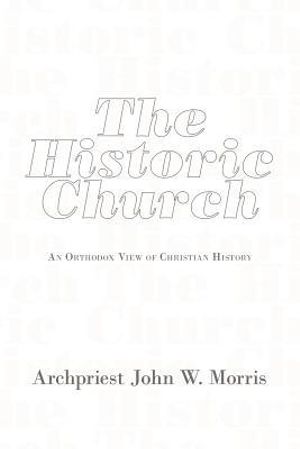
As seen from the book The Historic Church: An Orthodox View of Christian History
The Holy Eucharist
Like all Christians, Orthodox and Roman Catholics celebrate the Eucharist. The Orthodox and Roman Catholic Churches teach that the bread and wine become the actual Body and Blood of Christ. Both East and West also consider the Eucharist a commemoration or remembrance of the sacrifice of Christ on the cross. For this reason, both Churches describe the Eucharist as a “sacrifice of praise.” During his prayers, an Orthodox priest refers to the Divine Liturgy as a “liturgic and bloodless sacrifice.”544 During the Roman Catholic Mass, the priest says, “Pray, brethren, that our sacrifice may be acceptable to God, the Almighty Father.”545 Orthodox and Roman Catholic Christians also believe that in the Eucharist Christ both offers and receives the sacrifice. During the Orthodox Liturgy, the priest prays, “thou thyself art he that offereth and is offered, that is accepteth and is “distributed.”546 [1]
and
The Orthodox Church rejects any effort to use the categories of science or philosophy to explain how the bread and wine become the Body and Blood of Christ. Instead, the Orthodox consider the Eucharist a mystery that cannot be explained according to human reason.
Through the Eucharist, the Faithful partake of the Body and Blood of Christ, which imparts grace and the forgiveness of sins. Because Orthodox Christians reject any effort to understand the Eucharist through human reason, they are content with the words of the Holy Scriptures. Christ said, “this is my body…this is my blood.”787 St. Paul wrote, “The cup of blessing which we bless, is it not a participation in the blood of
Christ? The bread which we break, is it not a participation in the body of Christ.”788 Christ said, “he who eats my flesh and drinks my blood has eternal life, and I will raise him up the last day…he who eats my flesh and drinks my blood abides in me and I in him.”789 Thus, those who receive Holy Communion are united to Christ.790 Nicholas Cabasilas taught those who partake of Holy Communion, “receive God Himself,” because “Christ infuses Himself into us and mingles Himself with us. He changes and transforms us into Himself.”791
Through Holy Communion, the believer receives deifying grace from God by partaking of the very life of God through the reception of the Body and Blood of Christ. The Eucharist also defines and proclaims the reality of the Church. St. Paul wrote, “Because there is one bread, we who are Through Holy Communion, the believer receives deifying grace from God by partaking of the very life of God through the reception of the Body and Blood of Christ. The Eucharist also defines and proclaims the reality of the Church. St. Paul wrote, “Because there is one bread, we who are Masses offered, the greater the chance that God would grant their request.
There were priests whose sole ministry was saying Masses in return for a donation from those seeking some special favor from God. Some people left special endowments to pay for Masses for their release from purgatory.795 It is easy to see how this system can lead to misunderstandings and abuses. Orthodoxy and modern Roman Catholicism reject the crude folk religion that thought that every Mass is a new offering of Christ on the cross. However, Luther again went too far by rejecting the sacrificial nature of the Eucharist.
All prayer is an un-bloody sacrifice offered to God. As the supreme act of prayer by the community, the Divine Liturgy is sacrifice of praise, thanksgiving and worship offered to God. The Divine Liturgy is not a new offering of Christ, but it is a commemoration of the sacrifice of Christ on the cross.
St. Paul wrote, “For as often as you eat the bread and drink the cup, you proclaim the Lord’s death until he comes.”796 As the Apostle noted, the Jews became “partners in the altar” when they ate meat from the animal being offered.797 By partaking of the body and blood of Christ who offered Himself on the cross, the faithful become “partners” in the altar of Calvary.
Because it is a mystical participation in the worship of God in heaven, the Eucharist transcends time and space. For this reason, the faithful are mystically present when Christ offers Himself for the salvation of humanity through their participation in the Divine Liturgy. Christ is the true celebrant of the Eucharist. The priest is merely His representative.
Therefore, Christ offers Himself for the salvation of the Faithful at every Divine Liturgy. During the Byzantine Liturgy, the Priest prays, “thou thyself art he that offereth and is offered.”798 Finally, the Faithful offer themselves as a living sacrifice during the Eucharist. Thus, Luther and Protestantism goes to an extreme that robs the Eucharist of one of its most important meanings by failing to understand the sacrificial nature of the Divine Liturgy. [2]
[1] page 180, [2]pages 253-254 by Archpriest John W. Morris (2011-07-15). The Historic Church: An Orthodox View of Christian History (p. 180),(p. 254). AuthorHouse. Kindle Edition.
Wednesday, October 6, 2010
Calvinism 101
Take, eat: this is My spirit.
Drink ye all of this: this is a mere figure of My blood.
Do this in remembrance of Me. [ emphasis in the original Greek ]
So much for Sola Scriptura...
Friday, August 13, 2010
The Orthodox Christian Doctrine of Salvation
Since the Protestant Rebellion, there has been a heated debate within Christendom over the doctrine of salvation. For two thousand years, the Orthodox Catholic Church taught that salvation is a lifelong process, initiated through the blood of Christ in Holy Baptism, nurtured through faith and good works, and consummated at the Last Judgment. Protestants, on the other hand, believe that salvation is a one time event, based on the imputed righteousness of Christ that is received solely through faith. In favor of the Protestant position, Protestants cite passages of Holy Scripture such as Romans 3:28, which teaches that we are justified by “faith apart from works of the law.” Orthodox Christians cite passages like James 2:24, which says that we are “justified by works and not by faith alone.” In order to resolve this apparent contradiction, we must examine the whole of the New Testament. We must begin with the death of Christ, for that is the very ground of salvation.
Even here, there is a large dispute. Orthodox Christians believe that Jesus Christ died not to satisfy the wrath of a furious Father, but to loose the bonds of death and make union with Christ possible. Furthermore, this is accomplished not only through the Cross, but through the whole of the incarnation. St. Athanasius said that God became man so that man may become [like] God. This doctrine, called theosis, is taught in several passages of the Bible. For example, St. Peter teaches in 2 Peter 1:4 that we are to be “partakers of the divine nature.” St. Paul teaches in Romans 8:29 that we are to be “conformed to the image of His Son”. The Cross is the culmination of Christ’s saving work. St. Peter explains the purpose of the Cross in Acts 2:24, saying, “God raised [Jesus] up, loosing the pangs of death, because it was not possible for him to be held by it.” The purpose of the Cross is the destruction of death. Death could never hold the author of life, who is God. As St. Paul explains in 1 Corinthians 15:21, “For as by a man came death, by a man has come also the resurrection of the dead.”
By participating in the life giving death and resurrection of Christ, our sins are forgiven. In support of the position that Christ died to satisfy the wrath of a vengeful Father, Protestants often cite Romans 3:25, where Paul says , “God put forward [Jesus] as a propitiation by his blood, to be received by faith. This was to show God's righteousness, because in his divine forbearance he had passed over former sins.” The key word is “propitiation”, which would mean that Christ propitiated the wrath of the Father at Calvary. However, the most recent scholarship has demonstrated that this is in fact not the proper translation. (Finlan 39) The proper translation of the word “hilasterion” is rather, mercy seat. God puts forward Jesus Christ as a mercy seat. Thus, to receive forgiveness, one participates in this mercy seat. This is precisely what the Orthodox Church teaches.
As we can see, the main function of the Cross is union with Christ. This union is theosis, which is salvation. The first act that unites an individual with Christ Jesus is Holy Baptism. Baptism is not simply a symbol, but rather is the washing of regeneration, as St. Paul says in Titus 3:5. The new birth of the Christian life is baptism. Jesus Christ says in John 3:5 that one cannot enter the kingdom of God unless one is born of “water and the Spirit.” The church fathers understood the water here to be the waters of Holy Baptism, through which the Holy Ghost works. It truly does wash away all sins prior to baptism. In Acts 22:16, St. Paul tells people to “rise, be baptized and wash away your sins”. St. Peter tells everyone in Acts 2:38 to be “baptized for the remission of your sins.” Baptism washes away sins because baptism unites one to Christ. St. Paul says in Colossians 2:12 that we have been “buried with [Christ] in baptism.” He reiterates this thought in Romans 6:4, where he states that, “We were buried therefore with him by baptism into death, in order that, just as Christ was raised from the dead by the glory of the Father, we too might walk in newness of life.” He states in Galatians 3:27 that “As many of you as were baptized into Christ have put on Christ.” St. Peter seals the point by pointing out in 1 Peter 3:21 that “baptism, which corresponds to this, now saves you.”
In addition to baptism, which unites Christians with Christ, the sacrament of Holy Chrismation seals them with the gift of the Holy Ghost. St. Luke tells us in Acts of the Apostles that for the initial mysteries to be complete, one must not only be baptized, but also chrismated. He records in Acts 8:14-17 that, “when the apostles at Jerusalem heard that Samaria had received the word of God, they sent to them Peter and John, who came down and prayed for them that they might receive the Holy Spirit, for he had not yet fallen on any of them, but they had only been baptized in the name of the Lord Jesus. Then they laid their hands on them and they received the Holy Spirit.” St. Paul also mentions the formula of baptism and chrismation when he writes in Titus 3:5, “he saved us, not because of works done by us in righteousness, but according to his own mercy, by the washing of regeneration and renewal of the Holy Spirit” The washing of regeneration, obviously, is baptism. In accord with the events in Acts 8, chrismation is the renewal of the Holy Spirit.
As we see, the initial union with Christ is in Holy Baptism. However, theosis is a lifelong process. As St. Paul writes in Philippians 2:12, we are to “work out your own salvation with fear and trembling.” The key sacrament which brings us closer into union with Christ is the sacrament of the Holy Eucharist. The Eucharist is the central sacrament of Christian unity. In order to understand this, it is important to understand the Church as the body of Christ. This is mentioned in the Lord Jesus’ revelation to St. Paul. Paul had been persecuting the Church. Jesus then asks Him in Acts 9:4, “Why are you persecuting me?” This makes perfect sense when it is understood that Christ’s Church is the body of Christ. St. Paul says in 1 Corinthians 12:27, “you are the body of Christ and individually members of it.” How is the Church made into the body of Christ? St. Paul answers this question in 1 Corinthians 10:16-17. He says, “The cup of blessing that we bless, is it not a participation in the blood of Christ? The bread that we break, is it not a participation in the body of Christ? Because there is one bread, we who are many are one body, for we all partake of the one bread.” Paul thus teaches that the Church is made into the body of Christ by the partaking of the true body of Christ. In order for one to be truly united with Christ through the Holy Eucharist, it must be the true flesh and blood of Jesus Christ. This is why Jesus says in John 6:55 that “my flesh is true food, and my blood is true drink.” This is why He declared at the Last Supper that the bread was His body and that the wine was His blood.
As we have seen, one is united to Christ initially at baptism, sealed with the Holy Ghost at chrismation, and grows closer to Christ through the receipt of His body and blood. The question remains, however, how is one absolved of sins committed after baptism? One cannot be rebaptized, for baptism happens only once. The solution was given to us by Christ Jesus. For serious sins, the sacrament of confession is necessary. In John 20:23, Jesus says to His apostles, “If you forgive the sins of anyone, they are forgiven; if you withhold forgiveness from anyone, it is withheld.” Thus, the apostles had the authority to absolve sins. Obviously, today, the apostles are dead. Thus, for their apostolic authority to remain with us, they must have left us with successors. It is apparent that they did. In Acts 1:20, they ordain a successor in place of Judas, saying “Let another take his bishopric.” We understand from the Fathers of the Church that this line of succession continued perpetually in the bishops of the Church. St. Irenaeus of Lyons, for example, enumerates all of Peter’s successors in the bishops of Rome up to Irenaeus’ own day. The bishops then delegate presbyters to shepherd local parishes. The presbyters, known as priests, also have this authority to absolve sins, by virtue of their delegation by the bishop.
In light of these biblical doctrines, what can we say on the controversial subject of faith and works? It is quite evident that works play a key role in our salvation. For example, St. James says in James 2:24 that we are “justified by works and not by faith alone.” St. Paul says in Philippians 2:12 to “work out your own salvation with fear and trembling.” He also says in Romans 2:6 that God will render to each one “according to his works.” At the same time, Paul says in Ephesians 2:8-9 that we are “saved by grace through faith, not of yourselves, not of works, lest any man should boast.” How are we to reconcile these two apparently contradictory views in Scripture?
We must first understand that grace, and grace alone, is the foundation of our justification. No man can come to God unless God first draws Him. However, God draws all men to Himself, for Jesus says in John 12:32, “And I, when I am lifted up from the earth, will draw all people to myself.” Works can play no part in “persuading” God to save us. The first move is made by God, and no work intrudes on the basis of justification. This is why St. Paul says in Romans 11:6, “But if it is by grace, it is no longer on the basis of works; otherwise grace would no longer be grace.”
In light of this, we can now examine Paul’s teaching in Ephesians 2. When Paul says that we are saved by grace through faith, this is absolutely true. It is grace alone which saves us. When St. Paul says faith here, he is not actually referring to our faith in God. Rather, he is referring to God’s trustworthiness in fulfilling the covenant. He next declares that it is not our works which save us. It is important to understand that he is contrasting works with grace. St. Paul reiterates what he taught in Romans 11, namely, that no work can form the basis for justification. A work apart from grace is a dead work. In the very next verse, however, St. Paul states that “we are his workmanship, created in Christ Jesus for good works, which God prepared beforehand, that we should walk in them.” Paul is contrasting dead works, that is, works apart from grace, with living works, that is, works done by grace. This is made clear when he tells us in Romans 8:13 that “if you live according to the flesh you will die, but if by the Spirit you put to death the deeds of the body, you will live.” Works that contribute to justification are works done by the Spirit, that is, by the grace of the Holy Trinity.
In light of this, Paul’s teaching that we are justified apart from works of the law becomes perfectly understandable. We cannot work within the system of law. We can never obligate God to repay us with glorification. Rather, we must work within a system of grace, understanding that all good works we do are done by the grace of God. We must “work out our salvation with fear and trembling.” However, as Paul says in the next verse, we may do this because, “ it is God who works in you, both to will and to work for his good pleasure.”
Even here, there is a large dispute. Orthodox Christians believe that Jesus Christ died not to satisfy the wrath of a furious Father, but to loose the bonds of death and make union with Christ possible. Furthermore, this is accomplished not only through the Cross, but through the whole of the incarnation. St. Athanasius said that God became man so that man may become [like] God. This doctrine, called theosis, is taught in several passages of the Bible. For example, St. Peter teaches in 2 Peter 1:4 that we are to be “partakers of the divine nature.” St. Paul teaches in Romans 8:29 that we are to be “conformed to the image of His Son”. The Cross is the culmination of Christ’s saving work. St. Peter explains the purpose of the Cross in Acts 2:24, saying, “God raised [Jesus] up, loosing the pangs of death, because it was not possible for him to be held by it.” The purpose of the Cross is the destruction of death. Death could never hold the author of life, who is God. As St. Paul explains in 1 Corinthians 15:21, “For as by a man came death, by a man has come also the resurrection of the dead.”
By participating in the life giving death and resurrection of Christ, our sins are forgiven. In support of the position that Christ died to satisfy the wrath of a vengeful Father, Protestants often cite Romans 3:25, where Paul says , “God put forward [Jesus] as a propitiation by his blood, to be received by faith. This was to show God's righteousness, because in his divine forbearance he had passed over former sins.” The key word is “propitiation”, which would mean that Christ propitiated the wrath of the Father at Calvary. However, the most recent scholarship has demonstrated that this is in fact not the proper translation. (Finlan 39) The proper translation of the word “hilasterion” is rather, mercy seat. God puts forward Jesus Christ as a mercy seat. Thus, to receive forgiveness, one participates in this mercy seat. This is precisely what the Orthodox Church teaches.
As we can see, the main function of the Cross is union with Christ. This union is theosis, which is salvation. The first act that unites an individual with Christ Jesus is Holy Baptism. Baptism is not simply a symbol, but rather is the washing of regeneration, as St. Paul says in Titus 3:5. The new birth of the Christian life is baptism. Jesus Christ says in John 3:5 that one cannot enter the kingdom of God unless one is born of “water and the Spirit.” The church fathers understood the water here to be the waters of Holy Baptism, through which the Holy Ghost works. It truly does wash away all sins prior to baptism. In Acts 22:16, St. Paul tells people to “rise, be baptized and wash away your sins”. St. Peter tells everyone in Acts 2:38 to be “baptized for the remission of your sins.” Baptism washes away sins because baptism unites one to Christ. St. Paul says in Colossians 2:12 that we have been “buried with [Christ] in baptism.” He reiterates this thought in Romans 6:4, where he states that, “We were buried therefore with him by baptism into death, in order that, just as Christ was raised from the dead by the glory of the Father, we too might walk in newness of life.” He states in Galatians 3:27 that “As many of you as were baptized into Christ have put on Christ.” St. Peter seals the point by pointing out in 1 Peter 3:21 that “baptism, which corresponds to this, now saves you.”
In addition to baptism, which unites Christians with Christ, the sacrament of Holy Chrismation seals them with the gift of the Holy Ghost. St. Luke tells us in Acts of the Apostles that for the initial mysteries to be complete, one must not only be baptized, but also chrismated. He records in Acts 8:14-17 that, “when the apostles at Jerusalem heard that Samaria had received the word of God, they sent to them Peter and John, who came down and prayed for them that they might receive the Holy Spirit, for he had not yet fallen on any of them, but they had only been baptized in the name of the Lord Jesus. Then they laid their hands on them and they received the Holy Spirit.” St. Paul also mentions the formula of baptism and chrismation when he writes in Titus 3:5, “he saved us, not because of works done by us in righteousness, but according to his own mercy, by the washing of regeneration and renewal of the Holy Spirit” The washing of regeneration, obviously, is baptism. In accord with the events in Acts 8, chrismation is the renewal of the Holy Spirit.
As we see, the initial union with Christ is in Holy Baptism. However, theosis is a lifelong process. As St. Paul writes in Philippians 2:12, we are to “work out your own salvation with fear and trembling.” The key sacrament which brings us closer into union with Christ is the sacrament of the Holy Eucharist. The Eucharist is the central sacrament of Christian unity. In order to understand this, it is important to understand the Church as the body of Christ. This is mentioned in the Lord Jesus’ revelation to St. Paul. Paul had been persecuting the Church. Jesus then asks Him in Acts 9:4, “Why are you persecuting me?” This makes perfect sense when it is understood that Christ’s Church is the body of Christ. St. Paul says in 1 Corinthians 12:27, “you are the body of Christ and individually members of it.” How is the Church made into the body of Christ? St. Paul answers this question in 1 Corinthians 10:16-17. He says, “The cup of blessing that we bless, is it not a participation in the blood of Christ? The bread that we break, is it not a participation in the body of Christ? Because there is one bread, we who are many are one body, for we all partake of the one bread.” Paul thus teaches that the Church is made into the body of Christ by the partaking of the true body of Christ. In order for one to be truly united with Christ through the Holy Eucharist, it must be the true flesh and blood of Jesus Christ. This is why Jesus says in John 6:55 that “my flesh is true food, and my blood is true drink.” This is why He declared at the Last Supper that the bread was His body and that the wine was His blood.
As we have seen, one is united to Christ initially at baptism, sealed with the Holy Ghost at chrismation, and grows closer to Christ through the receipt of His body and blood. The question remains, however, how is one absolved of sins committed after baptism? One cannot be rebaptized, for baptism happens only once. The solution was given to us by Christ Jesus. For serious sins, the sacrament of confession is necessary. In John 20:23, Jesus says to His apostles, “If you forgive the sins of anyone, they are forgiven; if you withhold forgiveness from anyone, it is withheld.” Thus, the apostles had the authority to absolve sins. Obviously, today, the apostles are dead. Thus, for their apostolic authority to remain with us, they must have left us with successors. It is apparent that they did. In Acts 1:20, they ordain a successor in place of Judas, saying “Let another take his bishopric.” We understand from the Fathers of the Church that this line of succession continued perpetually in the bishops of the Church. St. Irenaeus of Lyons, for example, enumerates all of Peter’s successors in the bishops of Rome up to Irenaeus’ own day. The bishops then delegate presbyters to shepherd local parishes. The presbyters, known as priests, also have this authority to absolve sins, by virtue of their delegation by the bishop.
In light of these biblical doctrines, what can we say on the controversial subject of faith and works? It is quite evident that works play a key role in our salvation. For example, St. James says in James 2:24 that we are “justified by works and not by faith alone.” St. Paul says in Philippians 2:12 to “work out your own salvation with fear and trembling.” He also says in Romans 2:6 that God will render to each one “according to his works.” At the same time, Paul says in Ephesians 2:8-9 that we are “saved by grace through faith, not of yourselves, not of works, lest any man should boast.” How are we to reconcile these two apparently contradictory views in Scripture?
We must first understand that grace, and grace alone, is the foundation of our justification. No man can come to God unless God first draws Him. However, God draws all men to Himself, for Jesus says in John 12:32, “And I, when I am lifted up from the earth, will draw all people to myself.” Works can play no part in “persuading” God to save us. The first move is made by God, and no work intrudes on the basis of justification. This is why St. Paul says in Romans 11:6, “But if it is by grace, it is no longer on the basis of works; otherwise grace would no longer be grace.”
In light of this, we can now examine Paul’s teaching in Ephesians 2. When Paul says that we are saved by grace through faith, this is absolutely true. It is grace alone which saves us. When St. Paul says faith here, he is not actually referring to our faith in God. Rather, he is referring to God’s trustworthiness in fulfilling the covenant. He next declares that it is not our works which save us. It is important to understand that he is contrasting works with grace. St. Paul reiterates what he taught in Romans 11, namely, that no work can form the basis for justification. A work apart from grace is a dead work. In the very next verse, however, St. Paul states that “we are his workmanship, created in Christ Jesus for good works, which God prepared beforehand, that we should walk in them.” Paul is contrasting dead works, that is, works apart from grace, with living works, that is, works done by grace. This is made clear when he tells us in Romans 8:13 that “if you live according to the flesh you will die, but if by the Spirit you put to death the deeds of the body, you will live.” Works that contribute to justification are works done by the Spirit, that is, by the grace of the Holy Trinity.
In light of this, Paul’s teaching that we are justified apart from works of the law becomes perfectly understandable. We cannot work within the system of law. We can never obligate God to repay us with glorification. Rather, we must work within a system of grace, understanding that all good works we do are done by the grace of God. We must “work out our salvation with fear and trembling.” However, as Paul says in the next verse, we may do this because, “ it is God who works in you, both to will and to work for his good pleasure.”
Thursday, August 5, 2010
The Eucharist as Sacrifice
If such was the Church's understanding of baptism, the Eucharist was regarded as the distinctively Christian sacrifice from the closing decade of the first century, if not earlier. Malachi's prediction (I, 10 f.) that the Lord would reject the Jewish sacrifices and instead would have 'a pure offering' made to Him by the Gentiles in every place was early seized upon by Christians as a prophecy of the Eucharist. The Didache indeed actually applies the term θυσια, or sacrifice, to the Eucharist, and the idea is presupposed by Clement in the parallel he discovers between the Church's ministers and the Old Testament priests and Levites, as in his description of the function of the former as the offering of gifts (cf. τονς ... προσενεγκοντας ταγωρα). Ignatius' reference to 'one altar, just as there is one bishop,' reveals that he too thought in sacrificial terms. Justin speaks of 'all the sacrifices in this name which Jesus appointed to be performed, viz. in the Eucharist of the bread and the cup, and which are celebrated in every place by Christians'. Not only here but elsewhere too, he identifies 'the bread of the Eucharist, and the cup likewise of the Eucharist', with the sacrifice foretold by Malachi. For Irenaeus, the Eucharist is 'the new oblation of the new covenant', which the Church has received from the apostles and offers to God throughout the whole world.
It was natural for early Christians to think of the Eucharist as a sacrifice. The fulfillment of prophecy demanded a solemn Christian offering, and the rite itself was wrapped in the sacrificial atmosphere with which our Lord invested the Last Supper. The words of institution, 'Do this' (τουτο ποιειτε), must have been charged with sacrificial overtones for second century ears; Justin at any rate understood them to mean, 'Offer this'. If we inquire what the sacrifice was supposed to consist in, the Didache for its part provides no clear answer. Justin, however, makes it plain that the bread and the wine themselves were the 'pure offering' foretold by Malachi. Even if he holds that 'prayers and thanksgivings' (ευχαριστιαι) are the only God-pleasing sacrifices, we must remember that he uses the term 'thanksgiving' as technically equivalent to 'the eucharistized bread and wine'. The bread and wine, moreover, are offered 'for a memorial (εις αναμνησιν) of the passion', a phrase which in view of his identification of them with the Lord's body and blood implies much more than an act of purely spiritual recollection. Altogether it would seem that, while his language is not fully explicit, Justin is feeling his way to the conception of the Eucharist as the offering of the Savior's passion. Irenaeus' thought moves along rather different lines and does not link the Eucharist so closely with Christ's atoning death. When the bread and wine are offered to God, he thinks of them primarily as first-fruits of the earth which Christ has instructed us to offer, not because the Father needs them, but that we may not be found unfruitful and ungrateful. This is 'the oblation of the Church', and is well-pleasing to God as the expression of a sincere and faithful disposition. But the idea of the passion pervades this approach too, for Irenaeus identifies the gifts with Christ's body and blood and describes them, in language reminiscent of the Lord's words at the Last Supper, as 'the oblation of the new covenant'.
This leads us to consider the significance attached to the elements themselves in this period. From the Didache we gather that the bread and wine are 'holy'; they are spiritual food and drink communicating immortal life. Ignatius roundly declares that 'the Eucharist is the flesh of our Savior Jesus Christ, which suffered for our sins, and which the Father in His goodness raised'. The bread is the flesh of Jesus, the cup His blood. Clearly he intends this realism to be taken strictly, for he makes it the basis of his argument against the Docetists' denial of the reality of Christ's body. Because the Eucharist brings Christians into union with their Lord, it is the great bond between them; and since it mediates communion with Christ, it is a medicine which procures immortality (φαρμακοναθανασιας), an antidote against death which enables us to live in the Lord forever. Justin actually refers to the change. 'We do not receive these', he writes, 'as common bread or common drink. But just as our Savior Jesus Christ was made flesh through the Word of God and had both flesh and blood for our salvation, so also we have been taught that the food which has been eucharistized by the word of prayer from Him (that food which by process of assimilation nourishes our flesh and blood) is the flesh and blood of the incarnate Jesus.' So Irenaeus teaches that the bread and wine are really the Lord's body and blood. His witness is, indeed, all the more impressive, because he produces it quite incidentally while refuting the Gnostic and Docetic rejection of the Lord's real humanity. Like Justin, too, he seems to postulate a change, for he remarks: 'Just as the bread, which comes from the earth, when it receives the invocation of God, is no longer common bread but Eucharist, being composed of two elements, a terrestrial one and a celestial, so our bodies are no longer commonplace when they receive the Eucharist since they have the hope of resurrection to eternity'.
J.N.D. Kelly, Early Christian Doctrines, Revised Edition, pages 196-198,
published by Harper Collins.
published by Harper Collins.
Sunday, May 2, 2010
Eastern Orthodoxy NOT Refuted 16-19
Videos 16-19 in my discussion with drakeshelton on YouTube (as well as his videos to which these are responses), ending my discussion with him:
Friday, November 27, 2009
The Fathers on the Eucharist as Sacrifice
"And on the Lord's own day gather yourselves together and break bread and give thanks, first confessing your transgressions, that your sacrifice may be pure." - Didache, 14, 1 (AD 60)
"Since then these things are manifest to us, and we have looked into the depths of the divine knowledge, we ought to do in order all things which the Master commanded us to perform at appointed times. He commanded us to celebrate sacrifices and services, and that it should not be thoughtlessly or disorderly, but at fixed times and hours." - St. Clement of Rome, Letter to the Corinthians, 40, 1-2 (AD 95)
"Accordingly, God, anticipating all the sacrifices which we offer through this name, and which Jesus the Christ enjoined us to offer, in the Eucharist of the bread and the cup, and which are presented by Christians in all places throughout the world, bears witness that they are well-pleasing to Him." - St. Justin Martyr, Dialogue with Trypho, 117 (AD 150)
"And what have I to do with holocausts, which God does not stand in need of?--though indeed it does behove us to offer a bloodless sacrifice and reasonable service." - Athenagoras of Athens, A Plea for the Christians, 8 (AD 175)
"Listen to what happened in my presence, before my very eyes. There was a baby girl, whose parents had fled and had, in their fear, rather improvidently lift it in the charge of its nurse. The nurse took the helpless child to the magistrates. There, before the idol where the crowds were flocking, as it was too young to eat the flesh, they gave it some bread dipped in what was left of the wine offered by those who had already doomed themselves. Later, the mother recovered her child. But the girl could not reveal or tell the wicked thing that had been done, any more than she had been able to understand or ward it off before. Thus, when the mother brought her in with her while we were offering the Sacrifice, it was through ignorance that this mischance occurred. But the infant, in the midst of the faithful, resenting the prayer and the offering we were making, began to cry convulsively, struggling and tossing in a veritable brain-storm, and for all its tender age and simplicity of soul, was confessing, as if under torture, in every way it could, its consciousness of the misdeed. Moreover, when the sacred rites were completed and the deacon began ministering to those present, when its turn came to receive, it turned its little head away as if sensing the divine presence, it closed its mouth, held its lips tight, and refused to drink from the chalice. The deacon persisted and, in spite of its opposition, poured in some of the consecrated chalice. There followed choking and vomiting. The Eucharist could not remain in a body or mouth that was defiled; the drink which had been sanctified by Our Lord's blood returned from the polluted stomach. So great is the power of the Lord, and so great His majesty!" - St. Cyprian of Carthage, On the Lapsed, 25 (AD 254)
"Heaven is full, and full is the earth with your magnificent glory, Lord of Virtues. Full also is this Sacrifice, with your strength and your communion; for to You we offer this living Sacrifice, this unbloody oblation." - St. Serapion of Thmuis, Sacramentary, 13 (AD 350)
"Then, after the spiritual sacrifice, the bloodless service, is completed, over that sacrifice of propitiation we entreat God for the common peace of the Churches, for the welfare of the world; for kings; for soldiers and allies; for the sick; for the afflicted; and, in a word, for all who stand in need of succour we all pray and offer this sacrifice." - St. Cyril of Jerusalem, Catechetical Lectures, 23, 8 (AD 350)
"This Sacrifice, no matter who offers it, be it Peter or Paul, is always the same as that which Christ gave His disciples and which priests now offer: The offering of today is in no way inferior to that which Christ offered, because it is not men who sanctify the offering of today; it is the same Christ who sanctified His own. For just as the words which God spoke are the very same as those which the priest now speaks, so too the oblation is the very same." - St. John Chrysostom, Homilies on 2 Timothy, 2 (AD 397)
"For the whole Church observes this practice which was handed down by the Fathers: that it prayers for those who have died in the communion of the Body and Blood of Christ, when they are commemorated in their own place in the sacrifice itself; and the sacrifice is offered also in memory of them on their behalf." - St. Augustine of Hippo, Homilies, 172, 2 (AD 400)
"Since then these things are manifest to us, and we have looked into the depths of the divine knowledge, we ought to do in order all things which the Master commanded us to perform at appointed times. He commanded us to celebrate sacrifices and services, and that it should not be thoughtlessly or disorderly, but at fixed times and hours." - St. Clement of Rome, Letter to the Corinthians, 40, 1-2 (AD 95)
"Accordingly, God, anticipating all the sacrifices which we offer through this name, and which Jesus the Christ enjoined us to offer, in the Eucharist of the bread and the cup, and which are presented by Christians in all places throughout the world, bears witness that they are well-pleasing to Him." - St. Justin Martyr, Dialogue with Trypho, 117 (AD 150)
"And what have I to do with holocausts, which God does not stand in need of?--though indeed it does behove us to offer a bloodless sacrifice and reasonable service." - Athenagoras of Athens, A Plea for the Christians, 8 (AD 175)
"Listen to what happened in my presence, before my very eyes. There was a baby girl, whose parents had fled and had, in their fear, rather improvidently lift it in the charge of its nurse. The nurse took the helpless child to the magistrates. There, before the idol where the crowds were flocking, as it was too young to eat the flesh, they gave it some bread dipped in what was left of the wine offered by those who had already doomed themselves. Later, the mother recovered her child. But the girl could not reveal or tell the wicked thing that had been done, any more than she had been able to understand or ward it off before. Thus, when the mother brought her in with her while we were offering the Sacrifice, it was through ignorance that this mischance occurred. But the infant, in the midst of the faithful, resenting the prayer and the offering we were making, began to cry convulsively, struggling and tossing in a veritable brain-storm, and for all its tender age and simplicity of soul, was confessing, as if under torture, in every way it could, its consciousness of the misdeed. Moreover, when the sacred rites were completed and the deacon began ministering to those present, when its turn came to receive, it turned its little head away as if sensing the divine presence, it closed its mouth, held its lips tight, and refused to drink from the chalice. The deacon persisted and, in spite of its opposition, poured in some of the consecrated chalice. There followed choking and vomiting. The Eucharist could not remain in a body or mouth that was defiled; the drink which had been sanctified by Our Lord's blood returned from the polluted stomach. So great is the power of the Lord, and so great His majesty!" - St. Cyprian of Carthage, On the Lapsed, 25 (AD 254)
"Heaven is full, and full is the earth with your magnificent glory, Lord of Virtues. Full also is this Sacrifice, with your strength and your communion; for to You we offer this living Sacrifice, this unbloody oblation." - St. Serapion of Thmuis, Sacramentary, 13 (AD 350)
"Then, after the spiritual sacrifice, the bloodless service, is completed, over that sacrifice of propitiation we entreat God for the common peace of the Churches, for the welfare of the world; for kings; for soldiers and allies; for the sick; for the afflicted; and, in a word, for all who stand in need of succour we all pray and offer this sacrifice." - St. Cyril of Jerusalem, Catechetical Lectures, 23, 8 (AD 350)
"This Sacrifice, no matter who offers it, be it Peter or Paul, is always the same as that which Christ gave His disciples and which priests now offer: The offering of today is in no way inferior to that which Christ offered, because it is not men who sanctify the offering of today; it is the same Christ who sanctified His own. For just as the words which God spoke are the very same as those which the priest now speaks, so too the oblation is the very same." - St. John Chrysostom, Homilies on 2 Timothy, 2 (AD 397)
"For the whole Church observes this practice which was handed down by the Fathers: that it prayers for those who have died in the communion of the Body and Blood of Christ, when they are commemorated in their own place in the sacrifice itself; and the sacrifice is offered also in memory of them on their behalf." - St. Augustine of Hippo, Homilies, 172, 2 (AD 400)
The Fathers on Closed Communion of the Eucharist
The Orthodox practice of allowing only those who are Baptized and Chrismated members of the Church to partake of the Eucharist is an ancient one.
"But let no one eat or drink of this Eucharistic thanksgiving, but they that have been baptized into the name of the Lord; for concerning this also the Lord hath said: 'Give not that which is holy to the dogs.'" - Didache, 9, 10-12 (AD 60)
"And this food is called among us
"And when a certain one, who himself was defiled, dared with the rest to receive secretly a part of the sacrifice celebrated by the priest; he could not eat nor handle the holy of the Lord, but found in his hands when opened that he had a cinder. Thus by the experience of one it was shown that the Lord withdraws when He is denied; nor does that which is received benefit the undeserving for salvation, since saving grace is changed by the departure of the sanctity into a cinder." - St. Cyprian of Carthage, On the Lapsed, 26 (AD 254)
"His poverty enriches, the fringe of His garment heals, His hunger satisfies, His death gives life, His burial gives resurrection. Therefore, He is a rich treasure, for His bread is rich. And 'rich' is apt for one who has eaten this bread will be unable to feel hunger. He gave it to the Apostles to distribute to a believing people, and today He gives it to us, for He, as a priest, daily consecrates it with His own words. Therefore, this bread has become the food of the saints." - St. Ambrose of Milan, On the Patriarchs, 9, 38 (AD 390)
"But let no one eat or drink of this Eucharistic thanksgiving, but they that have been baptized into the name of the Lord; for concerning this also the Lord hath said: 'Give not that which is holy to the dogs.'" - Didache, 9, 10-12 (AD 60)
"And this food is called among us
"And when a certain one, who himself was defiled, dared with the rest to receive secretly a part of the sacrifice celebrated by the priest; he could not eat nor handle the holy of the Lord, but found in his hands when opened that he had a cinder. Thus by the experience of one it was shown that the Lord withdraws when He is denied; nor does that which is received benefit the undeserving for salvation, since saving grace is changed by the departure of the sanctity into a cinder." - St. Cyprian of Carthage, On the Lapsed, 26 (AD 254)
"His poverty enriches, the fringe of His garment heals, His hunger satisfies, His death gives life, His burial gives resurrection. Therefore, He is a rich treasure, for His bread is rich. And 'rich' is apt for one who has eaten this bread will be unable to feel hunger. He gave it to the Apostles to distribute to a believing people, and today He gives it to us, for He, as a priest, daily consecrates it with His own words. Therefore, this bread has become the food of the saints." - St. Ambrose of Milan, On the Patriarchs, 9, 38 (AD 390)
The Fathers on the Real Presence of Christ in the Eucharist
"They [the heterodox] abstain from the Eucharist and from prayer, because they do not confess the Eucharist to be the flesh of our Saviour Jesus Christ, which suffered for our sins, and which the Father, of His goodness, raised up again." - St. Ignatius of Antioch, Letter to the Smyrnaeans, 7 (AD 107)
"And this food is called among us the Eucharist, of which no one is allowed to partake but the man who believes that the things which we teach are true, and who has been washed with the washing that is for the remission of sins, and unto regeneration, and who is so living as Christ has enjoined. For not as common bread and common drink do we receive these; but in like manner as Jesus Christ our Saviour, having been made flesh by the Word of God, had both flesh and blood for our salvation, so likewise have we been taught that the food which is blessed by the prayer of His word, and from which our blood and flesh by transmutation are nourished, is the flesh and blood of that Jesus who was made flesh." - St. Justin Martyr, First Apology, 66 (AD 150)
"For we offer to Him His own, announcing consistently the fellowship and union of the flesh and Spirit. For as the bread, which is produced from the earth, when it receives the invocation of God, is no longer common bread, but the Eucharist, consisting of two realities, earthly and heavenly; so also our bodies, when they receive the Eucharist, are no longer corruptible, having the hope of the resurrection to eternity." - St. Irenaeus of Lyons, Against Heresies, 4, 18, 5 (AD 180)
"And the blood of the Lord is twofold. For there is the blood of His flesh, by which we are redeemed from corruption; and the spiritual, that by which we are anointed. And to drink the blood of Jesus, is to become partaker of the Lord's immortality; the Spirit being the energetic principle of the Word, as blood is of flesh. Accordingly, as wine is blended with water, so is the Spirit with man. And the one, the mixture of wine and water, nourishes to faith; while the other, the Spirit, conducts to immortality. And the mixture of both--of the water and of the Word--is called Eucharist, renowned and glorious grace; and they who by faith partake of it are sanctified both in body and soul. For the divine mixture, man, the Father's will has mystically compounded by the Spirit and the Word. For, in truth, the spirit is joined to the soul, which is inspired by it; and the flesh, by reason of which the Word became flesh, to the Word." - St. Clement of Alexandria, The Instructor of Children, 2, 2 (AD 200)
"When, therefore, He says, that whoever shall eat of His bread shall live for ever; as it is manifest that those who partake of His body and receive the Eucharist by the right of communion are living, so, on the other hand, we must fear and pray lest any one who, being withheld from communion, is separate from Christ’s body should remain at a distance from salvation; as He Himself threatens, and says, 'Unless ye eat the flesh of the Son of man, and drink His blood, ye shall have no life in you.' And therefore we ask that our bread—that is, Christ—may be given to us daily, that we who abide and live in Christ may not depart from His sanctification and body." - St. Cyprian of Carthage, On the Lord's Prayer, 18 (AD 250)
"Our Lord Jesus took in His hands what in the beginning was only bread; and He blessed it, and signed it, and made it holy in the name of the Father and in the name of the Spirit; and He broke it and in His gracious kindness He distributed it to all His disciples one by one. He called the bread His living Body, and did Himself fill it with Himself and the Spirit. And extending His hand, He gave them the Bread which His right hand had made holy: 'Take, all of you eat of this; which My word has made holy. Do not now regard as bread that which I have given you; but take, eat this Bread, and do not scatter the crumbs; for what I have called My Body, that it is indeed. One particle from its crumbs is able to sanctify thousands and thousands, and is sufficient to afford life to those who eat of it. Take, eat, entertaining no doubt of faith, because this is My Body, and whoever eats it in belief eats in it Fire and Spirit. But if any doubter eat of it, for him it will be only bread. And whoever eats in belief the Bread made holy in My name, if he be pure, he will be preserved in his purity; and if he be a sinner, he will be forgiven.' But if anyone despise it or reject it or treat it with ignominy, it may be taken as certainty that he treats with ignominy the Son, who called it and actually made it to be His Body." - St. Ephrem of Syria, Homilies, 4, 4 (AD 350)
"For as to what we say concerning the reality of Christ’s nature within us, unless we have been taught by Him, our words are foolish and impious. For He says Himself, 'My flesh is meat indeed, and My blood is drink indeed. He that eateth My flesh and drinketh My blood abideth in Me, and I in him.' As to the verity of the flesh and blood there is no room left for doubt. For now both from the declaration of the Lord Himself and our own faith, it is verily flesh and verily blood. And these when eaten and drunk, bring it to pass that both we are in Christ and Christ in us. Is not this true? Yet they who affirm that Christ Jesus is not truly God are welcome to find it false. He therefore Himself is in us through the flesh and we in Him, whilst together with Him our own selves are in God." - St. Hilary of Poitiers, On the Trinity, 8, 14 (AD 356)
"You shall see the Levites [Deacons] bringing loaves and a cup of wine, and placing them on the table. So long as the prayers of supplication and entreaties have not been made, there is only bread and wine. But after the great and wonderful prayers have been completed, then the bread is become the Body, and the wine the Blood, of our Lord Jesus Christ." - St. Athanasius the Great, Homily to the Newly-Baptized (AD 370)
"Since then He Himself declared and said of the Bread, 'This is My Body,' who shall dare to doubt any longer? And since He has Himself affirmed and said, 'This is My Blood,' who shall ever hesitate, saying, that it is not His blood?" - St. Cyril of Jerusalem, Catechetical Lectures, 22, 1 (AD 370)
"We see that the Saviour took [the bread] in His hands, as it is in the Gospel, when He was reclining at the supper; and He took this, and giving thanks, He said: 'This is really Me.' And He gave to His disciples and said: 'This is really Me.' And we see that It is not equal nor similar, not to the incarnate image, not to the invisible divinity, not to the outline of His limbs. For It is round of shape, and devoid of feeling. As to Its power, He means to say even of Its grace, 'This is really Me.'; and none disbelieves His word. For anyone who does not believe the truth in what He says is deprived of grace and of a Savior." - St. Epiphanius of Salamis, The Man Well-Anchored, 57 (AD 374)
"The bread is at first common bread; but when the mystery sanctifies it, it is called and actually becomes the Body of Christ." - St. Gregory of Nyssa, Orations and Sermons (AD 383)
"Perhaps you will say, 'I see something else, how is it that you assert that I receive the Body of Christ?' And this is the point which remains for us to prove. And what evidence shall we make use of? Let us prove that this is not what nature made, but what the blessing consecrated, and the power of blessing is greater than that of nature, because by blessing nature itself is changed." - St. Ambrose of Milan, On the Mysteries, 9, 50 (AD 390)
"It is not the power of man which makes what is put before us the Body and Blood of Christ, but the power of Christ Himself who was crucified for us. The priest standing there in the place of Christ says these words but their power and grace are from God. 'This is My Body,' he says, and these words transform what lies before him." - St. John Chrysostom, Homilies on the Treachery of Judas, 1,6 (AD 400)
"You ought to know what you have received, what you are going to receive, and what you ought to receive daily. That Bread which you see on the altar, having been sanctified by the word of God, is the Body of Christ. The chalice, or rather, what is in that chalice, having been sanctified by the word of God, is the Blood of Christ." - St. Augustine of Hippo, Homilies, 227, 21
"Christ said, indicating [the bread and wine]: 'This is My Body,' and 'This is My Blood,' in order that you might not judge what you see to be a mere figure. The offerings, by the hidden power of God Almighty, are changed into Christ's Body and Blood, and by receiving these we come to share in the life-giving and sanctifying efficacy of Christ." - St. Cyril of Alexandria, Commentary on the Gospel of St. Matthew, 26-27 (AD 428)
"And this food is called among us the Eucharist, of which no one is allowed to partake but the man who believes that the things which we teach are true, and who has been washed with the washing that is for the remission of sins, and unto regeneration, and who is so living as Christ has enjoined. For not as common bread and common drink do we receive these; but in like manner as Jesus Christ our Saviour, having been made flesh by the Word of God, had both flesh and blood for our salvation, so likewise have we been taught that the food which is blessed by the prayer of His word, and from which our blood and flesh by transmutation are nourished, is the flesh and blood of that Jesus who was made flesh." - St. Justin Martyr, First Apology, 66 (AD 150)
"For we offer to Him His own, announcing consistently the fellowship and union of the flesh and Spirit. For as the bread, which is produced from the earth, when it receives the invocation of God, is no longer common bread, but the Eucharist, consisting of two realities, earthly and heavenly; so also our bodies, when they receive the Eucharist, are no longer corruptible, having the hope of the resurrection to eternity." - St. Irenaeus of Lyons, Against Heresies, 4, 18, 5 (AD 180)
"And the blood of the Lord is twofold. For there is the blood of His flesh, by which we are redeemed from corruption; and the spiritual, that by which we are anointed. And to drink the blood of Jesus, is to become partaker of the Lord's immortality; the Spirit being the energetic principle of the Word, as blood is of flesh. Accordingly, as wine is blended with water, so is the Spirit with man. And the one, the mixture of wine and water, nourishes to faith; while the other, the Spirit, conducts to immortality. And the mixture of both--of the water and of the Word--is called Eucharist, renowned and glorious grace; and they who by faith partake of it are sanctified both in body and soul. For the divine mixture, man, the Father's will has mystically compounded by the Spirit and the Word. For, in truth, the spirit is joined to the soul, which is inspired by it; and the flesh, by reason of which the Word became flesh, to the Word." - St. Clement of Alexandria, The Instructor of Children, 2, 2 (AD 200)
"When, therefore, He says, that whoever shall eat of His bread shall live for ever; as it is manifest that those who partake of His body and receive the Eucharist by the right of communion are living, so, on the other hand, we must fear and pray lest any one who, being withheld from communion, is separate from Christ’s body should remain at a distance from salvation; as He Himself threatens, and says, 'Unless ye eat the flesh of the Son of man, and drink His blood, ye shall have no life in you.' And therefore we ask that our bread—that is, Christ—may be given to us daily, that we who abide and live in Christ may not depart from His sanctification and body." - St. Cyprian of Carthage, On the Lord's Prayer, 18 (AD 250)
"Our Lord Jesus took in His hands what in the beginning was only bread; and He blessed it, and signed it, and made it holy in the name of the Father and in the name of the Spirit; and He broke it and in His gracious kindness He distributed it to all His disciples one by one. He called the bread His living Body, and did Himself fill it with Himself and the Spirit. And extending His hand, He gave them the Bread which His right hand had made holy: 'Take, all of you eat of this; which My word has made holy. Do not now regard as bread that which I have given you; but take, eat this Bread, and do not scatter the crumbs; for what I have called My Body, that it is indeed. One particle from its crumbs is able to sanctify thousands and thousands, and is sufficient to afford life to those who eat of it. Take, eat, entertaining no doubt of faith, because this is My Body, and whoever eats it in belief eats in it Fire and Spirit. But if any doubter eat of it, for him it will be only bread. And whoever eats in belief the Bread made holy in My name, if he be pure, he will be preserved in his purity; and if he be a sinner, he will be forgiven.' But if anyone despise it or reject it or treat it with ignominy, it may be taken as certainty that he treats with ignominy the Son, who called it and actually made it to be His Body." - St. Ephrem of Syria, Homilies, 4, 4 (AD 350)
"For as to what we say concerning the reality of Christ’s nature within us, unless we have been taught by Him, our words are foolish and impious. For He says Himself, 'My flesh is meat indeed, and My blood is drink indeed. He that eateth My flesh and drinketh My blood abideth in Me, and I in him.' As to the verity of the flesh and blood there is no room left for doubt. For now both from the declaration of the Lord Himself and our own faith, it is verily flesh and verily blood. And these when eaten and drunk, bring it to pass that both we are in Christ and Christ in us. Is not this true? Yet they who affirm that Christ Jesus is not truly God are welcome to find it false. He therefore Himself is in us through the flesh and we in Him, whilst together with Him our own selves are in God." - St. Hilary of Poitiers, On the Trinity, 8, 14 (AD 356)
"You shall see the Levites [Deacons] bringing loaves and a cup of wine, and placing them on the table. So long as the prayers of supplication and entreaties have not been made, there is only bread and wine. But after the great and wonderful prayers have been completed, then the bread is become the Body, and the wine the Blood, of our Lord Jesus Christ." - St. Athanasius the Great, Homily to the Newly-Baptized (AD 370)
"Since then He Himself declared and said of the Bread, 'This is My Body,' who shall dare to doubt any longer? And since He has Himself affirmed and said, 'This is My Blood,' who shall ever hesitate, saying, that it is not His blood?" - St. Cyril of Jerusalem, Catechetical Lectures, 22, 1 (AD 370)
"We see that the Saviour took [the bread] in His hands, as it is in the Gospel, when He was reclining at the supper; and He took this, and giving thanks, He said: 'This is really Me.' And He gave to His disciples and said: 'This is really Me.' And we see that It is not equal nor similar, not to the incarnate image, not to the invisible divinity, not to the outline of His limbs. For It is round of shape, and devoid of feeling. As to Its power, He means to say even of Its grace, 'This is really Me.'; and none disbelieves His word. For anyone who does not believe the truth in what He says is deprived of grace and of a Savior." - St. Epiphanius of Salamis, The Man Well-Anchored, 57 (AD 374)
"The bread is at first common bread; but when the mystery sanctifies it, it is called and actually becomes the Body of Christ." - St. Gregory of Nyssa, Orations and Sermons (AD 383)
"Perhaps you will say, 'I see something else, how is it that you assert that I receive the Body of Christ?' And this is the point which remains for us to prove. And what evidence shall we make use of? Let us prove that this is not what nature made, but what the blessing consecrated, and the power of blessing is greater than that of nature, because by blessing nature itself is changed." - St. Ambrose of Milan, On the Mysteries, 9, 50 (AD 390)
"It is not the power of man which makes what is put before us the Body and Blood of Christ, but the power of Christ Himself who was crucified for us. The priest standing there in the place of Christ says these words but their power and grace are from God. 'This is My Body,' he says, and these words transform what lies before him." - St. John Chrysostom, Homilies on the Treachery of Judas, 1,6 (AD 400)
"You ought to know what you have received, what you are going to receive, and what you ought to receive daily. That Bread which you see on the altar, having been sanctified by the word of God, is the Body of Christ. The chalice, or rather, what is in that chalice, having been sanctified by the word of God, is the Blood of Christ." - St. Augustine of Hippo, Homilies, 227, 21
"Christ said, indicating [the bread and wine]: 'This is My Body,' and 'This is My Blood,' in order that you might not judge what you see to be a mere figure. The offerings, by the hidden power of God Almighty, are changed into Christ's Body and Blood, and by receiving these we come to share in the life-giving and sanctifying efficacy of Christ." - St. Cyril of Alexandria, Commentary on the Gospel of St. Matthew, 26-27 (AD 428)
Subscribe to:
Posts (Atom)

LORD JESUS CHRIST,
SON OF GOD,
HAVE MERCY ON US,
THE SINNERS.

Subscribe To


 Posts
All Comments
Posts
All Comments