Showing posts with label Books. Show all posts
Showing posts with label Books. Show all posts
Wednesday, August 7, 2013
The Orthodox Church
Written by Rev. Antonios Alevizopoulos, Th.D., Ph.D, and translated by Rev. Stephen Avramides
The link:
THE ORTHODOX CHURCH Its Faith, Worship and Life
Wednesday, October 31, 2012
The Condemnation of Arianism at Nicea (325)
The Arian heresy was decisively fought at the First Ecumenical Synod, which was summoned at Nicea in Bithynia in the summer of 325, at which Athanasius was present, accompanying his spiritual master Alexander of Alexandria. Although he was merely a deacon, Athanasius was active in the deliberations of the Synod.(16) His later successor, the resourceful Patriarch Cyril, relates that: Athanasius was so brilliant and celebrated and was admired by all even in that holy and great Synod, the one of Nicea, which was summoned in critical times. He did not yet hold the office of the bishop, but rather belonged to the class of the clerics, and yet, because of his sagacity and gentleness besides, and because of his exceedingly subtle and incomparable mind, he was at that time, taken as his companion by Alexander, the bishop of blessed memory. He was as close to the old man as a son is to his father, leader in everything helpful, and the one who showed the way right well in all things, which were to be done.(17)
Athanasius himself explains the argumentation of the Arians in his letter on the Synod of Nicea and the objections of the Fathers. The Arians put forward biblical words and phrases in order to cover up their particular viewpoint. The Fathers, however, stressed the meaning of the biblical data and did not hesitate to make use of literally non-biblical terms, just as the Arians did, in order to clear up the orthodox meaning of the former. Thus, the fathers clarified the biblical statement that The Son was From the Father, saying that, He was from the essence (being) of the Father, over against the Arian claim that, The Son was out of nothing and, therefore, a creature; and in order that the phrase From the essence might not imply division, the Fathers also added the term Co-essential (Homoousios) to the Father in order to specify the unity of the one and undivided Essence of the Father and the Son. The Great Athanasius was, through his writings, the defender and supporter, par excellence, of these dogmatic decrees of the Synod of Nicea, i.e. of the From the Essence and Co-essential.
Pages 196 - 197 from the book Saint Athanasius of Alexandria: Original Research and New Perspectives (Patristic Theological Library) by ProtoPresbyter George Dion. Dragas
Sunday, August 26, 2012
How can Material Things Communicate the Things of the Spirit?
As seen from the book Common Ground: An Introduction to Eastern Christianity for the American Christian
Pages 209-212 from the book "Common Ground: An Introduction to Eastern Christianity For the American Christian" by Jordan Bajis, 2006 Light and Life publishing
How Can Material Things Communicate The Things of The Spirit?
God Acts Within His Creation
How can material things make us aware of the presence of God? This truth can only be grasped if we understand that matter is not inherently base or evil. The earth is no less good than the spiritual realm which He created (Genesis 1:25). There is no "better-worse" distinction between the material and spiritual world; both were created by God, both, both co-habit the other, and both reveal God's presence.(52) The world is not a "failed attempt" of God. To reject creation as an inferior product is to reject the Creator Who made it.(53)
The earth has consistently been involved in the things of the Spirit. In fact, the whole scheme of salvation has been clearly "incarnated" in time and matter.(54) Creation, Redemption, the Incarnation, the Crucifixion, the Resurrection, Ascension, and Pentecost all took place within this material world. Not one of these events occurred purely in the "spiritual" realm.
The Scriptures make plain that if the material creation and the supernatural world did not have such an integral relationship with each other, the entire creation would collapse; "in Him all things hold together" (Colossians 1: 17). To pit objects we can smell, taste, and feel against those things that defy dimension is a contest that the Bible forbids. Matter and Spirit are not enemies; they are "relatives" which have both been fathered by the same Hand.
God created matter as well as spirit. God has created the entire world, and every ounce of matter belongs to Him....Therefore a certain tendency in religion which 'despises' material things, reducing religion to what is 'spiritual,' is wrong, non-Christian.(55)
As C.S. Lewis so aptly put it, "God likes matter; He invented it."
Redemption: The Restoration (Not The Obliteration) of The Material World
In the Last Day, the Lord will not discard His creation; it-like all those in Christ- will be restored and redeemed to its original "newness."
'Behold, I make all things new' [Revelations 21:5]. These were God's last words to us, and they only say at the end, and eternally, what was in His mind at the beginning, when He looked on the sacramental world of His creation and saw that it was good.(56)
In other words, Christ may make all things new, but he will not wipe out his creation in favor of a different creation. After Christ's return, it will be the same world, and we will still be human beings. The difference will be that God's redemptive presence within us and the world will be more fully revealed and experienced.(57)
Nothing in creation was meant to suffer death and to be thus imprisoned by corruption. Although the consequence of humanity's Fall has passed on to the world around us, sentencing it to the same curse (Romans 5:12), when Christ returns it will be a recipient of the same redemption we have inherited in Him (Romans 5:17-21).(58) Until that Day, man's call is to offer back creation to God. Such an offering is performed through the consecration of ourselves and all of creation to God. In this consecration, all matter acquires its spiritual meaning and is blessed.(59)
The crucial truth to be understood is that created matter is not inherently corrupt, nor is spirit inherently holy. Both have been personally made by the Lord for His glory. Both can be turned away from Him and thus corrupted. The spirit world cannot be distinguished from the material world on the basis of the one being more hallowed than the other:
... it must be remembered that corruption applies as much to the spiritual realm as to the material. The devils and damned souls in hell are, precisely, spirits in a state of corruption. Just as good food rots, and silver tarnishes, and our flesh sickens and decays, all of it because of evil, so the lordliest celestial spirits may rot and tarnish and decay into fiends in hell. It is the same process, the same fabric.(60)
The Spirituality of The Body
A negative view of creation often leads one to discount the physical nature of man. Many within the Evangelical-Fundamentalist stream believe that the real person is located only within the spirit or soul. This popular teaching continues by saying that the body is merely an "earth-suit," something God gave us so we could "get along" on the earth. The philosophy is often summarized, "We are a spirit, we have a soul, and we live in a body." The eternal reality of the person is confined to the spirit and soul, and the body will simply pass out of existence.(61)
Platonic philosophy supports such a non-matter view of man, but nowhere in the Scripture is this teaching supported.
The New Testament never uses 'spiritual (pneumatikos) in antithesis to the bodily (somatikos). There is no opposition between spirit and body, for there is even such a thing as a spiritual body (soma pneumatikon) (1 Corinthians 15:44).(62)
God created man as both spirit and matter from the very beginning. The body is not carnal; it just as spiritual (godly and holy) as our souls and spirits are.
Likewise, our true selves are not composed of two or three parts that can be studied in isolation. We are not parts (material + spiritual); we are whole beings (material inter-dwelling spiritual). Spirit and matter inseparably make up our entire identity; our bodies are an inherent part of our personhood. "The spiritual man does not have a body, but is a body. Man is 'bodily' a spiritual being, and is 'spiritually' a material being."(63)
As shocking as it may seem to some of us, the truth is that our bodies (not just our souls) will be with us for eternity. And our bodies-along with the created world-will be saved:
....even we groan within ourselves, waiting eagerly for our adoption as sons, the redemption of our body (Romans 8:23).(64)
On the Last Day our bodies will not be destroyed. Far from it! They will be cast in the very likeness of Christ's resurrected body(1 John 3:2; 1 Corinthians 15:42; Philippians 3:21). One day our flesh of corruption will be transformed, and it-along with all of "mattered-creation"-will experience full redemption (1 Corinthians 15:38-45).(65) Yes, it is true that our bodies will be glorified, and yet they will still be that same "seed" of flesh that we presently identify as our physical persons.
Pages 209-212 from the book "Common Ground: An Introduction to Eastern Christianity For the American Christian" by Jordan Bajis, 2006 Light and Life publishing
Thursday, February 9, 2012
Handbook of Patristic Exegesis: The Bible in Ancient Christianity
Just started to get into it:
Handbook of Patristic Exegesis: The Bible in Ancient Christianity

Something I thought was interesting:
[1] pages 130-132 from the Handbook of Patristic Exegesis: The Bible in Ancient Christianity by Charles Kannengiesser
Handbook of Patristic Exegesis: The Bible in Ancient Christianity
Something I thought was interesting:
Quote:
"Two Judaism and Rhetorical Culture
b. Midrash
Th e second group of texts which refl ect biblical interpretation dating from
the Amoraic period in Eretz Israel is called midrash. Th e term ( מִדְרָשׁ , from
דָּרַשׁ , darash, “to seek,” “inquire,” “investigate”) refers to a method of expounding
the text and to a collection of such texts. Th ese texts are commentary and
elaboration on the Written Torah. Th e various collections which fall under
the head of midrash, however, can focus on deriving rabbinic halakah based
on Scripture, or provide elaborations on narrative passages in the Bible. Th ey
may be organized according to the order of the biblical text, or arranged as
homilies corresponding to the lection on Sabbaths and Holy Days.
In midrash we can discern some of the interrelationship of Judaism
and Christianity during the early Christian period. Th ere are some remarkable
parallels in hermeneutical method between the midrashim and Greek
and Syriac patristic literature. Origen and Jerome are explicitly aware of
midrashic traditions. Moreover, in the third century tensions between Jews
and Christians (including Origen and Eusebius) living in Eretz Israel rose
to a level of confrontation. Th ese debates can be discerned in the pages of
midrash from this period, and the development of midrash in Eretz Israel
(not in Babylonia) may in part be the result of Jewish eff orts to confront their
Christian counterparts regarding interpretation of the Scriptures.
An example of rabbinic response to Christianity can be found in Genesis
Rabbah on the sacrifi ce of Isaac (the Akedah, Gen :–). Th e account
begins with the command to Abraham to go to the place he would be told,
and sacrifi ce his son (Gen :). He took two slaves and Isaac on the journey.
Th en he “saw the place from afar” (Gen :; מָקוֹם (maqom), meaning “place”
also serves as a euphemism for God. Th e midrash asks, “What did he see?”
“He saw a cloud attached to the mountain”—i.e., a manifestation of the divine
presence, which made it clear to him that this mountain was the place which
God had commanded as the appropriate place to off er up Isaac.
He [Abraham] said: “It would appear that is the place upon which the
Holy one, blessed be He, commanded me to sacrifi ce my son.” He said
to Isaac: “My son, do you see what I do?” He told him, “Yes.” He said
to his two young men, “Do you see what I do?” Th ey said to him, “No.”
He said: “Since you do not see it, REMAIN HERE WITH THE ASS
[Gen :], for you are like the ass [which also does not see].” (Gen.
Rab. .–)
We learn from other sources that the Gentiles are “a nation resembling an ass.”
Christians and Jews debated vehemently in the third and fourth centuries
about the possibility of how, aft er the destruction of the Second Temple, that
BblRieba ltebo b ttoihn teihc S eLe Sipteteupratautguainrgetin t
one could verify divine revelation, and whether divine revelation to a non-
Jew was possible at all. In the above passage we observe the denigration of
the two non-Jewish servants. Th ey do not have any perception of the divine.
As non-Jews they are like the ass, a dumb animal incapable of perception.
Modern scholars may have some disagreement about whether or not the
“people who is like an ass” refers specifi cally to Christians or more generally
to pagans. Nonetheless, there are many passages in midrash literature which
focus on the theme of Verus Israel and God’s continued covenant with the
Jewish people in their exile.
i. Tannaitic Midrashim
Th e oldest group of midrashim are the so-called Tannaitic midrashim, sometimes
called halakic midrashim or מִרְשֵׁי הֲלָכָה (midreshei halakah, meaning
“midrashim of the halakah”). Th e works included in this subgroup are the
Mekilta d’Rabbi Ishmael and the Mekilta de Rabbi Simeon ben Yohai on Exodus,
Sipra on Leviticus; and Sipre on Numbers and Deuteronomy. Th e Tannaitic
midrashim may be said to form a continuous commentary on the Pentateuch
from Exodus to Deuteronomy. In these midrashim there is extensive use
of rabbinic hermeneutics to demonstrate how various expansions of the
Oral Law are grounded in Scripture. Despite the use of the name halakic
midrashim, these collections all contain commentary on narrative passages
in their respective biblical books.
ii. Exegetical Midrashim
A second set of midrashim consists of those referred to as “exegetical” and
“homiletic.” Th e “exegetical” midrashim are later than the midreshei halakah, but
a number were compiled during the fi ft h century. It is important to remember
that the midreshei halakah are exegetical, but modern scholars refer to them as
“exegetical” because these collections are organized according to the biblical
verse order. Th e term “exegetical midrashim” merely distinguishes them from
the next group to be described, which are called “homiletic midrashim.”
Genesis Rabbah explicates the book of Genesis. Scholars postulate that
it was redacted in the fi ft h century. It is considered by some to be the best
example of the exegetical midrashim because the rabbis reveal deep layers
of meaning within the text. Th e meanings the rabbis sought in the Scriptures
included truths which pertained to their own age. Genesis Rabbah provides
many examples of rabbinic apologetic against pagan and Christian arguments.
In the narratives about the patriarchs and matriarchs, it is possible
Two Judaism and Rhetorical Culture
to discern their veiled arguments against Christian claims that these biblical
fi gures reached their true fulfi llment only in Christ.
In this period exegetical midrashim were also edited on the fi ve books
in the Hebrew Bible called the Five Megillot, or “Five Scrolls.” Th ese biblical
books were read as part of the synagogue liturgy for the three pilgrimage festivals:
Passover (Canticles), Pentecost (Ruth), and Tabernacles (Ecclesiastes);
and on Purim (the Feast of Esther) and the Ninth of Ab commemorating
the destruction of the Temple in Jerusalem (Lamentations). Th e earliest
description of the liturgical role for these books is in the Mishnah, tractate
Megillah.
Th ese midrashim would include Canticles Rabbah; Midrash Ruth (also
called Ruth Rabbah); Lamentations Rabbah; Midrash Qoheleth (also called
Ecclesiastes Rabbah); and the fi rst half (§§ –) of Esther Rabbah.
iii. Homiletic Midrashim
“Homiletic” midrashim are so called because the order of their composition
follows the readings for Sabbaths and for special Sabbaths, or Holy Days, in
the liturgical year. Th ese collections do not follow the order of the biblical
text. Rather, they develop thematically. As we have them, these homilies have
sometimes been subjected to abbreviation or other editorial reformulation.
Th e most signifi cant collections dating to the Amoraic period include Leviticus
Rabbah, containing thirty-seven homilies, which dates to the fi ft h century
(perhaps later); the Pesiqta de Rab Kahana, a collection of homilies for feasts
and special Sabbaths, redacted in the fi ft h century, though subject to later additions;
and the Tanhuma on the Pentateuch, which contains some material
from the Amoraic period but was not redacted until the medieval period.
Modern scholarship has concentrated considerable eff ort on the structure
of these homilies, especially the formal conventions for their beginning
and conclusion. Th e petiah, which is generally understood to be a kind of
proem or introduction to the homilies, is the most common rhetorical form
in midrashic literature. Petiot aim at artfully leading the hearer from verses
in other parts of the Hebrew Bible, such as Psalms or Proverbs, to consider
the opening verse(s) of the Pentateuchal reading of the day. Th e atimah, or
peroration of the homily, has also been studied. Particularly in the Pesiqta de
Rab Kahana, and Tanhuma, these atimot lead to an eschatological teaching
which concludes the homily with a message of hope in the messianic deliverance
of the Jewish people from the harshness of its exile. Th ese atimot may
off er students of patristic literature some understanding of the development
of early Christian typological exegesis." [1]
[1] pages 130-132 from the Handbook of Patristic Exegesis: The Bible in Ancient Christianity by Charles Kannengiesser
Tuesday, January 31, 2012
Christ willed dually and not singly
The Disputation With Pyrrhus of Our Father Among the Saints Maximus the Confessor
7. Maximus: Yes, I truly do. For what is a more irreverent conception than that which maintains that the same person with the very same will, which before the Incarnation created everything from nothing and which maintains, provides, and orders everything for salvation, after the Incarnation desireth food and drink, changeth from one position to another, and performeth all manner of similar things that are free from blame and reproach, but which would by this means prove that the whole Economy of the Incarnation was not illusory?
8. Pyrrhus: But is Christ one or not?
9. Maximus: Yes, obviously He is one.
10. Pyrrhus: If Christ be one person, then He willed as one person. And if He willed as one person, then doubtless He hath one will, and not two.
11. Maximus: To state something and not first to distinquish the different meanings of what is being said invites confusion, and ensures that what is under investigation remains obscure, which is foreign to a man of learning. Therefore, explain this to me: If Christ be one, is He God only, or man only, or both together, God and man?
12. Pyrrhus: Obviously, God and man.
13. Maximus: Therefore, Christ existeth as God and as man by nature. Then did He will as God and as man, or only as Christ? If it were Christ who willed and initiated actions, being both God and man, then it is clear that, being one and the same, He willed dually and not singly. For if Christ be nothing else apart from the natures from which and in which He existeth, then obviously He willeth and operateth in a manner corresponding to each of his natures, in other words, as each nature is capable of operating. And if He hath two natures, then He surely must have two natural wills, the wills and essential operations being equal in number to the natures. For just as the number of natures of the one and the same Christ, correctly understood and explained, doth not divide Christ but rather preserveth the distinction of natures in the union, so likewise the number of essential attributes, wills, and operations attached to those two natures doth not divide Christ either. For throughout both of His natures there flowed the same activity and purpose, to witm our salvation. This introduceth no division -- God forbid! --but rather shows that they are preserved unimpaired, in their entirety, even in the union.
pages 3-5 from the book "The Disputation With Pyrrhus Of Our Father Among The Saints Maximus The Confessor" Translated from the Greek by Joseph P. Farrell
Friday, December 2, 2011
Christology and the Mysteries(Sacraments)
The Disputation With Pyrrhus of Our Father Among the Saints Maximus the Confessor
[1] pages xii - xvi from the preface of the book The disputation with Pyrrhus of Our Father Among the Saints Maximus the Confessor
As with St. Irenaeus, there is an ecclesiological and sacramental dimension to the doctrine of Recapitulation. Baptism is an essential component of the mystery and for the spiritual life, since the believer must recapitulate that which Christ Himself fulfilled and repeated in His own Recapitulation. As was the case with Sts. Irenaeus and Athanasius, one cannot separate the divine and invisible nature from the works which He does in His human and visible nature, and therefore one cannot separate water and the Spirit into two separate baptisms or events, as this would be a kind of sacramental Nestorianism. [1]
[1] pages xii - xvi from the preface of the book The disputation with Pyrrhus of Our Father Among the Saints Maximus the Confessor
Saturday, November 5, 2011
On the Person of Christ: The Christology of Emperor Justinian
Translated by Kenneth P. Wesche
On the Person of Christ: The Christology of Emperor Justinian
 From the preface:
From the General Intoduction
> [1] page 9,[2] pages 16-17,[3] page 17,[4] pages 18-19 from the book "On the Person of Christ: The Christology of Emperor Justinian" as translated by Kenneth P. Wesche
On the Person of Christ: The Christology of Emperor Justinian
"The documents of Justinian included in this volume represents a Cyrillian interpretation of the Christology of the Council of Chalcedon upheld by Orthodox theologians even today. For that reason these documents are important as a source for understanding the philosophical principles of Orthodox theology, particularly as Orthodox and other christian theologians come together in ecumenical dialogue. The principles of Orthodox philosophy find their starting point in the confession of Jesus as the Christ, the Son of God, the Divine Logos himself. The consequences of this confession of faith as a philosophical starting point are presented in brief both in the General Introduction and in the notes scattered throughout the text. Sixth century thought presents the student of christian doctrine with a dogmatic philosophy still in the process of attaining full clarification. The principal contribution made by sixth century thought towards a fully articulated "Christological philosophy" is the clear, unambiguous affirmation that the hypostasis or prosopon used in Chalcedon's definition of faith is not the product, but the foundation of the union between God and man in Jesus Christ: this is because the hypostasis of Jesus Christ is none other than the eternally existing Divine Logos, the Second Hypostasis of the Holy Trinity. These documents, therefore, are also of historical interest for they provide us with a glimps of christian philosophical thought moving closer to a full articulation of its belief in Jesus Christ." [1]
From the General Intoduction
Quote: “Nestorius was vigorously opposed by Cyril of Alexandria who insisted that the one who was born of Mary, Jesus of Nazareth, was none other than the Divine Logos himself. For that reason, Mary must be called “Theotokos” for Jesus whom she bore is himself God by nature and by hypostasis. This is the same as Justinian’s view and provides the background for understanding his freguent charges that the Nestorians call Christ a mere man. In fact, Nestorian Christology can indeed call Christ Christ God and man, but this is because “Christ” is the meeting point of the human and divine natures, and if we look at Christ in one direction we see the Divine Logos, or the divine nature, and if we look in another direction we see Jesus, or the human nature. The crucial point, however, is that in the Nestorian way of thinking, Jesus is the human nature in Christ and is therefore not himself identical to the Divine Logos. This latter point is what Justinian has in mind when he makes his charge, for with St. Cyril he wishes to emphasize that Jesus is not someone else than the Divine Logos but that he is one and the same Divine Logos; “Christ,” in other words, is the Divine Logos only who as the incarnate Divine Logos is both human and divine in nature, but divine only in identity or person.” [2]
quote: “It is most important to note how this view of Christ’s particularity distinquishes Justinian’s “Cyrillian Chalcedonianism from Nestorianism and from many Christologies one encounters in Western Christian thought. At issue is “who” lies inside the particular prosopon of Christ, and what is the starting point for determining that. Both Nestorianism and Cyrillian Chalcedonianism acknowledge that there is one Christ who is one particular or hypostasis or prosopon, and that furthermore this one Christ is divine and human in his natures. Many contemporary theologians who have sought to vindicate Nestorius from his condemnation at the Council of Ephesus in 431 base their defense of Nestorius precisely on this point: Nestorius, as also the Council of Chalcedon in 451, taught that Christ is one particular who is both God and man. But many of these scholars fail to grasp the significance of the fundamentally different starting points characterizing these two Christologies which lead to radically different notions of hypostasis and the content and identity of Christ.” [3]
Quote: “These different starting points yield radically different confessions concerning the philosophical content of the particular or hypostasis of Christ: the former understands hypostasis in terms of identity, i.e the subjective core, the “self” (autos in Greek) or “who” of Christ, which is one, and is seen to be the Divine Logos himself so that the terms “Jesus,” “Christ,” and “Divine Logos” are identical, referring to one and the same subject. The hypostasis, then, is the foundation, not the product, of the union, for it is the eternally existing Divine Logos, the one through whom all things came into being in the first place. The latter, on the other hand, starting from the “undivided appearence” of the historical Jesus, understands hypostasis as the product rather than the foundation of the coming together of the two natures. These two natures, moreover, are each seen as two fully intact subjects: Jesus is the human nature and so is a “someone other” than the Divine Logos, for the Divine Logos is the divine nature. On the basis of this Cyrillian Christology Justinian published the condemnation of the Three Chapters in 543, which was confirmed by the Fifth Ecumenical Council in Constantinople in 553. The Three chapters were “Nestorian” documents from the late fourth and fifth centuries. They included the writings of Theodore of Mopsuestia (and Theodore himself was included in the condemnation, which proved to be so controversial that Justinian was compelled to justify posthumous condemnations, which he does in the second and third documents presented here):” [4]
> [1] page 9,[2] pages 16-17,[3] page 17,[4] pages 18-19 from the book "On the Person of Christ: The Christology of Emperor Justinian" as translated by Kenneth P. Wesche
Sunday, September 18, 2011
GRATIA ET CERTAMEN - by D. OGLIARI
I am really enjoying this book. It's going to be an awesome resource!
Gratia et Certamen: The Relationship Between Grace and Free Will in the Discussion of Augustine with the So-Called Semipelagians
As seen from Amazon.com
.
Gratia et Certamen: The Relationship Between Grace and Free Will in the Discussion of Augustine with the So-Called Semipelagians
As seen from Amazon.com
"Product Description
The issues involved in the discussion between the monks of Hadrumetum/Marseille and Augustine range from questions of initium fidei and naturae bonum, to the understanding of predestination. The monks' reaction to Augustine's doctrine of absolute sovereign grace must be seen as a plea in favour of a harmonizing approach, where human commitment is also envisaged as playing, at times, a primary role. In the light of a dialogical synergism, of a unitarian and cosmic view of God's oeconomia salutis, and relying on a strong ascetic framework, the monks biggest fear was that the implications of Augustine's predestinarian view would jeopardise the importance of the struggle for perfection, the meaning of God's universal salvific will, of Christ's redeeming action, and finally of the Church. The different theological traditions to which Augustine and the monks appealed play also a significant role, as do the specific social and religious context in which they respectively moved."
.
Sunday, September 4, 2011
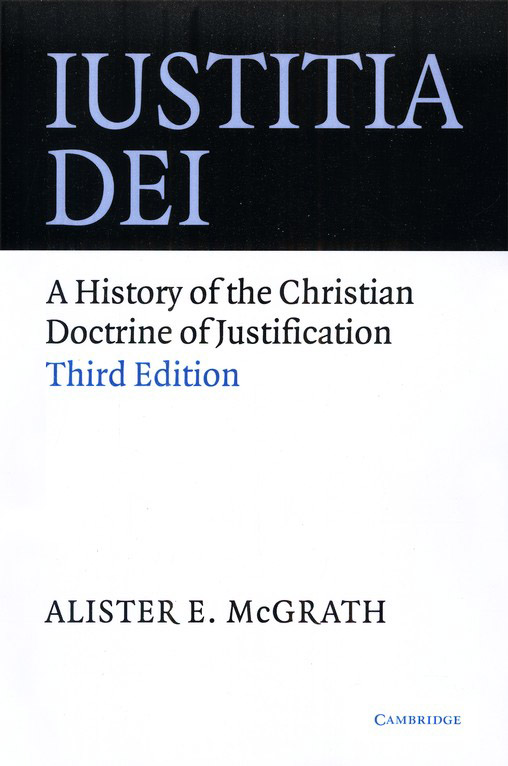
Iustitia Dei: A History of the Christian Doctrine of Justification
By the Anglican Alister Mcgrath Is now on Kindle and at a more affordable price
Iustitia Dei: A History of the Christian Doctrine of Justification
Wednesday, July 20, 2011
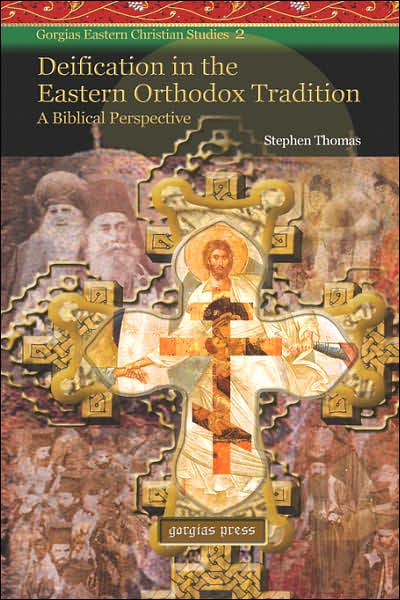
Deification in the Eastern Orthodox Tradition: A Biblical Perspective
I just got it yesterday
Deification in the Eastern Orthodox Tradition: A Biblical Perspective
A review of the book:
To read the rest please visit St. GEORGE ORTHODOX INFORMATION SERVICE
Deification in the Eastern Orthodox Tradition: A Biblical Perspective
A review of the book:
This leads on to the final chapter of the book where Thomas engages with the event in the Gospels which scripturally reveals the hope of our deification in the story of Christ's transfiguration on Mount Tabor in which the three Apostles see what true restored humanity looks like in the vision of Christ's human body radiating with divine light. Thomas' exegesis of this passage is made even more interesting through the way in which he constructs a multi-faceted perspective on the Transfiguration through narrating the viewpoints of the three Apostles and eye-witnesses that Christ took with him up the Mountain, St. Peter, St. James and St. John. Thomas then goes on to show how their witness of this extraordinary vision, together with Paul's vision of the Risen Christ on the road to Damascus, transformed their theology and their lives through analysing the epistles that the apostles wrote after Christ's Resurrection. Thus, to take just a few examples that Thomas explores in greater depth, in his second Epistle St. Peter writes that through Christ we might 'escape from the corruption … and become partakers of the divine nature' (2 Pet. 1:4) and John the theologian's speaks more poetically of our 'abiding in the light' of Christ to become children of light bearing the same light that Christ showed on Mount Tabor and finally St. Paul, after his Damascan vision of Christ's light, speaks of our being 'changed into his likeness from one degree of glory into another' (2 Cor 3:18). As these few examples indicate, through his full analysis of the writings of the New Testament Thomas demonstrates, against certain Protestant concerns, that the Orthodox belief in deification is clearly biblically grounded.
Thus although from the dust jacket, scholarly ring of the title and formal presentation of the text it might be easy to overlook Thomas' study as another arcane academic tome, I found Thomas' study to be an ideal introductory book to the faith for interested Orthodox lay people, catechumens and non-Orthodox enquirers. For in the course of exploring the Biblical grounds of the Orthodox understanding of deification, Thomas' provides an accessible and luminously clear account of many basic theological and practical issues of Orthodox belief and practice. Moreover, at the end of the book he has also usefully provided a lengthy appendix with helpful bibliographical suggestions of where the interested enquirer can look next.
To read the rest please visit St. GEORGE ORTHODOX INFORMATION SERVICE
Thursday, June 30, 2011
Orthodoxy and Heterodoxy - by Fr. Andrew Damick
I just ordered mine today

You can also get it at Conciliar Press.
As seen from the website:
For more information and opinions about the book go to Amazon.com
.
You can also get it at Conciliar Press.
As seen from the website:
"Quick Overview
Are you an Orthodox Christian who wonders how to explain to your Baptist grandmother, your Buddhist neighbor, or the Jehovah’s Witness at your door how your faith differs from theirs? Or are you a member of another faith who is curious what Orthodoxy is all about? Look no further. In Orthodoxy & Heterodoxy, Fr. Andrew Stephen Damick covers the gamut of ancient heresies, modern Christian denominations, fringe groups, and major world religions, highlighting the main points of each faith. This book is an invaluable reference for anyone who wants to understand the faiths of those they come in contact with—as well as their own."
For more information and opinions about the book go to Amazon.com
.
My secondary sources for the book I'm working on
The secondary sources:
1.) Gratia et Certamen: The Relationship Between Grace and Free Will in the Discussion of Augustine with the So-Called Semipelagians (Bibliotheca Ephemeridum Theologicarum Lovaniensium) (an academic and lead authority about the subject, and so it was only right that I use him as a resource)
2.) Grace and Christology in the Early Church (Oxford Early Christian Studies) (another academic resource about the subject that will be used as a reference, I could be wrong but I think the author is a Reformed protestant)
3.) The Ancestral sin (an academic source about the early fathers on the issue of original sin)
4.) Free Choice in Saint Maximus the Confessor (an academic source about the Post Augustine 7th century Christian East view about free will and the theology behind the 6th ecumenical council)
5.) The Doctrine of Grace in the Apostolic Fathers (a pro-reformed and calvinistic bias by one of their well known scholars that I will be fighting against in the book)
6.) Putting Amazing Back into Grace: Embracing the Heart of the Gospel (another pro-reformed and calvinistic bias by one of their well known scholars that I will be fighting against in the book)
7.) What's So Great About the Doctrines of Grace? (a pro-Calvinistic and Reformed resource in regards to what TULIP is. I will use this as a resource in my book)
8.) Why I Am Not an Arminian (a pro-Calvinistic and Reformed resource in regards to Calvinism that I will use as a resource for the book)
9.) Reconsidering Tulip (an anti-Calvinistic and Reformed bias that I will use as a resource for my book)
10.) Why I Am Not a Calvinist (an anti-Calvinistic bias by Arminian scholars that I will use as a resource)
11.) Against Calvinism (an anti-Calvinistic bias by a well known Arminian scholar that I will use as a resource once this book comes out in October)
12.) Grace, Faith, Free Will (an anti-Calvinistic bias by an Arminian scholar that I will use as a resource in the book)
13.) Arminian Theology: Myths and Realities (an Arminian source that I will use as a resource)
14.) Calvinism: A Southern Baptist Dialogue (a resource about the history of Calvinism and non-Calvinism in the SBC. I have the book and I found somethings in it that will be useful to what I'm writing)
15.) A Dictionary of Early Christian Beliefs (A resource with an Anglican and Anabaptist bias)
16.) A Dictionary of Early Christian Biography (a scholarly resource with an Anglican and Augustinian bias)
17.) Early Christian Doctrines: Revised Edition (a scholarly resource with an Anglican and Augustinian bias)
18.) The Christian Tradition: A History of the Development of Doctrine, Vol. 1: The Emergence of the Catholic Tradition (100-600) (a scholarly resource with a Lutheran and Augustinian bias)
19.) The Christian Tradition: A History of the Development of Doctrine, Vol. 2: The Spirit of Eastern Christendom (600-1700) (a scholarly resource with a Lutheran and Augustinian bias)
20.) The Christian Tradition: A History of the Development of Doctrine, Vol. 3: The Growth of Medieval Theology (600-1300) (a scholarly resource with a Lutheran and Augustinian bias)
21.) The Orthodox Way (a scholarly resource with an Orthodox bias)
22.) Eastern Orthodox Christianity: A Western Perspective (a scholarly resource with a Charismatic evangelical protestant bias: the protestant author taught at Moscow university for 5 years)
23.) Eastern Orthodox Theology: A Contemporary Reader (a scholarly resource with a Charismatic evangelical protestant bias: the protestant author taught at Moscow university for 5 years)
24.) Recovering the Scandal of the Cross: Atonement in New Testament & Contemporary Contexts (an anti-Reformed and Calvinistic bias)
Books I still need to get:
25.) Pierced for Our Transgressions: Rediscovering the Glory of Penal Substitution (a pro Calvinistic and Reformed view)
26.) Christus Victor: An Historical Study of the Three Main Types of the Idea of Atonement (a pro Lutheran[one Lutheran school of thought] and Eastern Christian view, as well as the historic Christian view in general)
There are a number of other books, articles, and online material that will be used as well. If there are more books you think I might need just let me know. If I have the time and money then I might buy them. It all depends on the content of the books and if they are saying something not already said in the books I listed above.
1.) Gratia et Certamen: The Relationship Between Grace and Free Will in the Discussion of Augustine with the So-Called Semipelagians (Bibliotheca Ephemeridum Theologicarum Lovaniensium) (an academic and lead authority about the subject, and so it was only right that I use him as a resource)
2.) Grace and Christology in the Early Church (Oxford Early Christian Studies) (another academic resource about the subject that will be used as a reference, I could be wrong but I think the author is a Reformed protestant)
3.) The Ancestral sin (an academic source about the early fathers on the issue of original sin)
4.) Free Choice in Saint Maximus the Confessor (an academic source about the Post Augustine 7th century Christian East view about free will and the theology behind the 6th ecumenical council)
5.) The Doctrine of Grace in the Apostolic Fathers (a pro-reformed and calvinistic bias by one of their well known scholars that I will be fighting against in the book)
6.) Putting Amazing Back into Grace: Embracing the Heart of the Gospel (another pro-reformed and calvinistic bias by one of their well known scholars that I will be fighting against in the book)
7.) What's So Great About the Doctrines of Grace? (a pro-Calvinistic and Reformed resource in regards to what TULIP is. I will use this as a resource in my book)
8.) Why I Am Not an Arminian (a pro-Calvinistic and Reformed resource in regards to Calvinism that I will use as a resource for the book)
9.) Reconsidering Tulip (an anti-Calvinistic and Reformed bias that I will use as a resource for my book)
10.) Why I Am Not a Calvinist (an anti-Calvinistic bias by Arminian scholars that I will use as a resource)
11.) Against Calvinism (an anti-Calvinistic bias by a well known Arminian scholar that I will use as a resource once this book comes out in October)
12.) Grace, Faith, Free Will (an anti-Calvinistic bias by an Arminian scholar that I will use as a resource in the book)
13.) Arminian Theology: Myths and Realities (an Arminian source that I will use as a resource)
14.) Calvinism: A Southern Baptist Dialogue (a resource about the history of Calvinism and non-Calvinism in the SBC. I have the book and I found somethings in it that will be useful to what I'm writing)
15.) A Dictionary of Early Christian Beliefs (A resource with an Anglican and Anabaptist bias)
16.) A Dictionary of Early Christian Biography (a scholarly resource with an Anglican and Augustinian bias)
17.) Early Christian Doctrines: Revised Edition (a scholarly resource with an Anglican and Augustinian bias)
18.) The Christian Tradition: A History of the Development of Doctrine, Vol. 1: The Emergence of the Catholic Tradition (100-600) (a scholarly resource with a Lutheran and Augustinian bias)
19.) The Christian Tradition: A History of the Development of Doctrine, Vol. 2: The Spirit of Eastern Christendom (600-1700) (a scholarly resource with a Lutheran and Augustinian bias)
20.) The Christian Tradition: A History of the Development of Doctrine, Vol. 3: The Growth of Medieval Theology (600-1300) (a scholarly resource with a Lutheran and Augustinian bias)
21.) The Orthodox Way (a scholarly resource with an Orthodox bias)
22.) Eastern Orthodox Christianity: A Western Perspective (a scholarly resource with a Charismatic evangelical protestant bias: the protestant author taught at Moscow university for 5 years)
23.) Eastern Orthodox Theology: A Contemporary Reader (a scholarly resource with a Charismatic evangelical protestant bias: the protestant author taught at Moscow university for 5 years)
24.) Recovering the Scandal of the Cross: Atonement in New Testament & Contemporary Contexts (an anti-Reformed and Calvinistic bias)
Books I still need to get:
25.) Pierced for Our Transgressions: Rediscovering the Glory of Penal Substitution (a pro Calvinistic and Reformed view)
26.) Christus Victor: An Historical Study of the Three Main Types of the Idea of Atonement (a pro Lutheran[one Lutheran school of thought] and Eastern Christian view, as well as the historic Christian view in general)
There are a number of other books, articles, and online material that will be used as well. If there are more books you think I might need just let me know. If I have the time and money then I might buy them. It all depends on the content of the books and if they are saying something not already said in the books I listed above.
Saturday, June 4, 2011
Reconsidering Tulip - by Alexander Renault
Lulu.com

From the book.
To read the rest please buy the book.
I'm halfway through the book and most of what I read so far is really good. I've noticed a few areas where I would differ or disagree, but over all I think this is a great effort by Alexander Renault. It's the first book of it's kind that I am aware of. And this is something we need. And so I would like to thank Alexander Renault for taking the time to write something like this.

From the book.
Preface
Once upon a time I was a Calvinist. It was a happy time. It was a
time of enormous growth and learning. And having come from an
evangelical tradition that emphasized individualism and emotion, I
found that Calvinism now presented me with a veritable feast for the
intellect. I met many other Calvinists who loved the Lord their God
with all their heart, soul, strength, and mind—Christians whose faith
and piety continue to inspire me to this day.
I felt like the Bible was making more and more sense every day.
I saw things I never saw before. I learned that Christianity was far
bigger than I had originally suspected, having grown up in an isolated
evangelical bubble. The Reformed doctrines of predestination, which
before seemed abhorrent and strange to me, now became crystal clear.
I read Reformed materials voraciously—everything from Calvin
and Luther to Berkhof and Warfield; from John Owen and Jonathan
Edwards to N.T. Wright and John Piper; from Boettner, Van Til, and
Spurgeon to Sproul, Wilson, and Leithart, not to mention the countless
articles, debates, and podcasts I found online. I studied the works of
dispensationalists, premillennialists, amillennialists, postmillennialists,
preterists, futurists, theonomists, reconstructionists, presuppositionalists,
Federal Visionists, and any other “ists” that had a voice in
the world of Reformed Christianity. And in addition to memorizing
many of the Bible verses that supported Calvinism, I even spent a year
memorizing the entire Westminster Shorter Catechism while in training
to be an elder at my local Presbyterian church.
Something else that I found to be new and exciting in my Reformed
journey was the respect that they seemed to have for the early Church
Fathers. I would occasionally hear preachers quote from some ancient
saint who actually lived before the Reformation. I had always just
assumed that once the ink dried on the book of Revelation, the Church
fell apart and went completely apostate until Martin Luther recovered
the truth in the 16th century. I would hear Reformed teachers say that
there was a “thread of consistency” that reached from the Reformation
all the way back to the earliest Christians. This gave me a degree of
comfort I never had before as a modern evangelical, when I suspected
that my faith looked absolutely nothing like the faith of those “early
Church Fathers,” whoever those guys were anyway.
It was around this time that Dan Brown wrote his infamous book,
The Da Vinci Code. The premise of Brown’s book was that the early
Christians essentially invented their faith—that the divinity of Christ
wasn’t even developed until the council of Nicea in 325 AD. No sooner
did Brown’s book make the best-seller lists than a slew of apologetic
articles appeared on the Internet. And of course, wanting to defend
my faith and encourage those who were being negatively influenced
by The Da Vinci Code, I read several of these articles. I found out
that there were a bunch of people called the “early Church Fathers”—
genuine Christians who lived during the first few centuries of the
Church.
I heard names like Ignatius, Polycarp, Clement, Irenaeus, and
countless others that were new to me. I read what they had to say
about the divinity of Christ. I read about how they were influential in
the early Church, and how so many of them were martyred for their
beliefs. Slowly but surely, I started to like these guys.
And that’s where all my trouble began. I had absolute respect
for the Reformers and for the confessions they created, especially
the Westminster Standards, which were particularly important to
my Presbyterian denomination. I also had absolute and unshakeable
respect for the Holy Scriptures. And now I was beginning to have a
growing respect for the early Church Fathers. These were the three
different spheres of influence in my Christian life: the Westminster
Divines, the Bible, and the early Fathers.
The problem, however, was that I couldn’t get all three spheres
to line up! I was beginning to realize that the early Church Fathers
taught things that were vastly different than what my Reformed faith
was teaching me. Yes, there were certainly disagreements among
them on minor doctrinal issues, but by and large, the early Fathers
were all in agreement on things that I had just assumed were Roman
Catholic inventions: things like the salvific efficacy of the sacraments,
the necessity of works for salvation, the ever-virginity of Mary, the
importance of tradition and apostolic succession, the rejection of
sola scriptura, etc. But the big kicker was that virtually every early
Church Father taught against all five points of Calvinism (summed up today by the acronym TUL IP: Total Depravity, Unconditional
Election, Limited Atonement, Irresistible Grace, and Perseverance of
the Saints). So, of these spheres that I so desperately wanted to hold
onto, I realized I could only pick two out of the three. It was either the
Divines’ interpretation of Scripture or it was the Fathers’ interpretation
of Scripture. I simply couldn’t have it both ways.
I suppose many Calvinists would say at this point, “What’s the
problem? Simply accept the Divines’ interpretation of Scripture and
throw out the Fathers. What did they know anyway?” And that was
exactly the question that began to haunt me: What did they know
anyway? When I read little bits and snippets from the Fathers during
my time as a Calvinist, I sensed deep down that they had a fervor
and a zeal that the Reformers seemed to be lacking. They spoke
with authority, like people who had genuinely experienced a direct
encounter with Almighty God."
To read the rest please buy the book.
I'm halfway through the book and most of what I read so far is really good. I've noticed a few areas where I would differ or disagree, but over all I think this is a great effort by Alexander Renault. It's the first book of it's kind that I am aware of. And this is something we need. And so I would like to thank Alexander Renault for taking the time to write something like this.
Monday, May 2, 2011
An Outline of Orthodox Patristic Dogmatics
An Outline Of Orthodox Patristic Dogmatics by Fr. John S. Romanides

About the author and book: (As seen from St. Johns book store)
The Outline:
Part One: God and the World
1.) God's Relation to the World
2.) Distinction of "Created" and "Uncreated", How and From Where Do We Know It
3.) The Distinction between Essence (Being) and Energy (Act) in God
4.) A General Account of the Church's Doctrine about the World
Part Two: The Holy Trinity
1.) The Gnostics
2.) Monarchianism
3.) Paul of Samosata and Lucian: Forerunners of Arius
4.) Arianism
5.) Orthodox Anti-Arian Doctrine
6.) The Doctrine of the Holy Spirit
7.) The Franco-Latin Doctrine of the Filioque
8.) The Political Reasons for the Impositions of the Filioque
Part Three: Christology
1.) Introduction to Christology
2.) The Early Christological Heresies and the Orthodox Doctrine
3.) Nestorianism and the Third Ecumenical Council (431/3)
4.) The So-called Robber Council of 449
5.) The Fourth Ecumenical Council (451)
6.) The Fifth Ecumenical Council (553)
7.) The Sixth Ecumenical Council (680/1)
Part Four: Ecclesiology
A) The Church in General Perspective
B) The Church's Holy Tradition
1.) The Deposit of the Faith and Holy Tradition
2.) The Recipients, Guardians and Transmitters of the Holy Tradition
3.) The Deposit of the Faith and Holy Scripture
4.) The Deposit of Faith, the Glory of God and the Friends of God
5.) The Glory of God, the Love of God and the Torments of Hell
6.) The Torments of Hell in the Western Augustinian Tradition
C) Christian Perfection
1.) Perfection and the Mystery of the Cross in the Bible and the Fathers
2.) The Mystery of the Cross and the Boldness and Mediation of the Saints
3.) The stages of Perfection and the Mystery of the Cross
4.) The Knowledge of Those Who Have Reached Theosis
5.) The Distiction between Direct and Indirect Knowledge of God
6.) Apostolic Succession and Christ's Presence in the Sacraments
D) The Last Things(Eschatology)
1.) First Resurrection, Second Resurrection and Partial Judgment
2.) The Franco-Latin and Orthodox Patristic Views on the Last Things
About the author and book: (As seen from St. Johns book store)
Quote:
Author: John S. Romanides
The late Professor John Romanides, a graduate and, subsequently, a Professor of Holy Cross Greek Orthodox School of Theology in Brookline, Massachusetts (1958-1965), and a Professor of the Aristotle University of Thessalonica, Greece (1968-1984) was one of the most original theologians of Eastern Orthodox Christianity worldwide in the second half of the 20th century. Raised in America and having become familiar with Western Christians, Roman Catholics and Protestants, as well as Western theological scholarship, both through his upbringing and his involvement in the modern Ecumenical Dialogues, he developed a critical and highly original Eastern Orthodox approach to Christian theology. He identified his approach with the Christian Roman ecumene that was centered in Constantinople, New Rome. His views on Christian "Romanity" and "Roman Orthodoxy" have earned him the title of "Prophet of Roman Orthodoxy" and have given rise to a school of committed followers and to much discussion. This book is Romanides' first Outline of Orthodox Patristic Dogmatics, which is published for the first time in the original Greek and in English translation. It represents a concise introduction into his understanding of the basic tenets of the Eastern Orthodox Faith and its fundamental differences from those of Western (Augustinian or Franco-Latin) Christian theology. It covers such doctrines as God's relation to the world, the doctrine of the Holy Trinity, the doctrine of Christ, the doctrine of the Church, the Church's Holy Tradition and the restoration and perfection of humanity in and through this Tradition. It will serve as an introduction into this theologian's original vision of Patristic Orthodoxy, which is the basis of his reappraisal of Christian theology and history. Its value lies in its concise, coherent and comprehensive character.
The Outline:
Part One: God and the World
1.) God's Relation to the World
2.) Distinction of "Created" and "Uncreated", How and From Where Do We Know It
3.) The Distinction between Essence (Being) and Energy (Act) in God
4.) A General Account of the Church's Doctrine about the World
Part Two: The Holy Trinity
1.) The Gnostics
2.) Monarchianism
3.) Paul of Samosata and Lucian: Forerunners of Arius
4.) Arianism
5.) Orthodox Anti-Arian Doctrine
6.) The Doctrine of the Holy Spirit
7.) The Franco-Latin Doctrine of the Filioque
8.) The Political Reasons for the Impositions of the Filioque
Part Three: Christology
1.) Introduction to Christology
2.) The Early Christological Heresies and the Orthodox Doctrine
3.) Nestorianism and the Third Ecumenical Council (431/3)
4.) The So-called Robber Council of 449
5.) The Fourth Ecumenical Council (451)
6.) The Fifth Ecumenical Council (553)
7.) The Sixth Ecumenical Council (680/1)
Part Four: Ecclesiology
A) The Church in General Perspective
B) The Church's Holy Tradition
1.) The Deposit of the Faith and Holy Tradition
2.) The Recipients, Guardians and Transmitters of the Holy Tradition
3.) The Deposit of the Faith and Holy Scripture
4.) The Deposit of Faith, the Glory of God and the Friends of God
5.) The Glory of God, the Love of God and the Torments of Hell
6.) The Torments of Hell in the Western Augustinian Tradition
C) Christian Perfection
1.) Perfection and the Mystery of the Cross in the Bible and the Fathers
2.) The Mystery of the Cross and the Boldness and Mediation of the Saints
3.) The stages of Perfection and the Mystery of the Cross
4.) The Knowledge of Those Who Have Reached Theosis
5.) The Distiction between Direct and Indirect Knowledge of God
6.) Apostolic Succession and Christ's Presence in the Sacraments
D) The Last Things(Eschatology)
1.) First Resurrection, Second Resurrection and Partial Judgment
2.) The Franco-Latin and Orthodox Patristic Views on the Last Things
Friday, March 25, 2011
Why I'm Writing a Book
TOTAL DEPRAVITY
Barnabas (A.D. 70): "Learn: before we believed in God, the habitation of our heart was corrupt and weak."
Ignatius (A.D. 110): "They that are carnal cannot do the things that are spiritual... Nor can the unbelievers do the things of belief."
Justin Martyr (A.D. 150): "Mankind by Adam fell under death, and the deception of the serpent; we are born sinners... No good thing dwells in us... For neither by nature, nor by human understanding is it possible for me to acquire the knowledge of things so great and so divine, but by the energy of the Divine Spirit... Of ourselves it is impossible to enter the kingdom of God... He has convicted us of the impossibility of our nature to obtain life... Free will has destroyed us; we who were free are become slaves and for our sin are sold... Being pressed down by our sins, we cannot move upward toward God; we are like birds who have wings, but are unable to fly."
Clement Of Alexandria (A.D. 190): "The soul cannot rise nor fly, nor be lifted up above the things that are on high, without special grace."
Origen: "Our free will... or human nature is not sufficient to seek God in any man."
Eusebius (A.D. 330): "The liberty of our will in choosing things that are good is destroyed."
Augustine (A.D. 370): "If, therefore, they are servants of sin (2 Cor. 3:17), why do they boast of free will?... O, man! Learn from the precept what you ought to do; learn from correction, that it is your own fault you have not the power... Let human effort, which perished by Adam, here be silent, and let the grace of God reign by Jesus Christ... What God promises, we ourselves do not through free will of human nature, but He Himself does by grace within us... Men labor to find in our own will something that is our own, and not God's; how can they find it, I know not."
As you can see, they provide zero links directly to the Fathers and early Christian witnesses themselves. I don't think they want people to actually read them in context. And so I'm working on a book. It started out as a paper in response to several of my Christian hip-hop Calvinistic friends, but it's turning into a book. Below are some quotes of some of the Fathers and early Christian witnesses that they won't quote. And unlike a number of Calvinistic websites out there, I give direct links for all to see.
If we start with their belief about Free Will, then the rest should fall into place:
FREE WILL
Saint Ignatius (110 A.D.)
"For when ye are desirous to do well, God is also ready to assist you."
Saint Justin Martyr (150 A.D.)
"But lest some suppose, from what has been said by us, that we say that whatever happens, happens by a fatal necessity, because it is foretold as known beforehand, this too we explain. We have learned from the prophets, and we hold it to be true, that punishments, and chastisements, and good rewards, are rendered according to the merit of each man’s actions. Since if it be not so, but all things happen by fate, neither is anything at all in our own power. For if it be fated that this man, e.g., be good, and this other evil, neither is the former meritorious nor the latter to be blamed. And again, unless the human race have the power of avoiding evil and choosing good by free choice, they are not accountable for their actions, of whatever kind they be. But that it is by free choice they both walk uprightly and stumble, we thus demonstrate. We see the same man making a transition to opposite things. Now, if it had been fated that he were to be either good or bad, he could never have been capable of both the opposites, nor of so many transitions. But not even would some be good and others bad, since we thus make fate the cause of evil, and exhibit her as acting in opposition to herself; or that which has been already stated would seem to be true, that neither virtue nor vice is anything, but that things are only reckoned good or evil by opinion; which, as the true word shows, is the greatest impiety and wickedness. But this we assert is inevitable fate, that they who choose the good have worthy rewards, and they who choose the opposite have their merited awards. For not like other things, as trees and quadrupeds, which cannot act by choice, did God make man: for neither would he be worthy of reward or praise did he not of himself choose the good, but were created for this end; nor, if he were evil, would he be worthy of punishment, not being evil of himself, but being able to be nothing else than what he was made."
Tatian (160 A.D.)
"How, then, shall I admit this nativity according to Fate, when I see such managers of Fate? I do not wish to be a king; I am not anxious to be rich; I decline military command; I detest fornication; I am not impelled by an insatiable love of gain to go to sea; I do not contend for chaplets; I am free from a mad thirst for fame; I despise death; I am superior to every kind of disease; grief does not consume my soul. Am I a slave, I endure servitude. Am I free, I do not make a vaunt of my good birth. I see that the same sun is for all, and one death for all, whether they live in pleasure or destitution. The rich man sows, and the poor man partakes of the same sowing. The wealthiest die, and beggars have the same limits to their life. The rich lack many things, and are glorious only through the estimation they are held in; but the poor man and he who has very moderate desires, seeking as he does only the things suited to his lot, more easily obtains his purpose. How is it that you are fated to be sleepless through avarice? Why are you fated to grasp at things often, and often to die? Die to the world, repudiating the madness that is in it. Live to God, and by apprehending Him lay aside your old nature. We were not created to die, but we die by our own fault. Our free-will has destroyed us; we who were free have become slaves; we have been sold through sin. Nothing evil has been created by God; we ourselves have manifested wickedness; but we, who have manifested it, are able again to reject it."
Saint Irenaeus (180 A.D.)
"They will find in our dispensation, that "many are called, but few chosen"; and that there are those who inwardly are wolves, yet wear sheep’s clothing in the eyes of the world (foris); and that God has always preserved freedom, and the power of self-government in man, while at the same time He issued His own exhortations, in order that those who do not obey Him should be righteously judged (condemned) because they have not obeyed Him; and that those who have obeyed and believed on Him should be honoured with immortality."
Saint Irenaeus (180 A.D.)
"For He who makes the chaff and He who makes the wheat are not different persons, but one and the same, who judges them, that is, separates them. But the wheat and the chaff, being inanimate and irrational, have been made such by nature. But man, being endowed with reason, and in this respect like to God, having been made free in his will, and with power over himself, is himself the cause to himself, that sometimes he becomes wheat, and sometimes chaff."
Saint Irenaeus (180 A.D.)
"God therefore has given that which is good, as the apostle tells us in this Epistle, and they who work it shall receive glory and honour, because they have done that which is good when they had it in their power not to do it; but those who do it not shall receive the just judgment of God, because they did not work good when they had it in their power so to do. 2. But if some had been made by nature bad, and others good, these latter would not be deserving of praise for being good, for such were they created; nor would the former be reprehensible, for thus they were made [originally]. But since all men are of the same nature, able both to hold fast and to do what is good; and, on the other hand, having also the power to cast it from them and not to do it,—some do justly receive praise even among men who are under the control of good laws (and much more from God), and obtain deserved testimony of their choice of good in general, and of persevering therein; but the others are blamed, and receive a just condemnation, because of their rejection of what is fair and good. And therefore the prophets used to exhort men to what was good, to act justly and to work righteousness, as I have so largely demonstrated, because it is in our power so to do, and because by excessive negligence we might become forgetful, and thus stand in need of that good counsel which the good God has given us to know by means of the prophets."
Clement of Alexandria (195 A.D.)
"Whether, then, the Father Himself draws to Himself everyone who has led a pure life, and has reached the conception of the blessed and incorruptible nature; or whether the free-will which is in us, by reaching the knowledge of the good, leaps and bounds over the barriers, as the gymnasts say; yet it is not without eminent grace that the soul is winged, and soars, and is raised above the higher spheres, laying aside all that is heavy, and surrendering itself to its kindred element."
Clement of Alexandria (195 A.D.)
"Notwithstanding then since to obey or not is in our own power, provided we have not the excuse of ignorance to adduce. He makes a just call, and demands of each according to his strength. For some are able as well as willing, having reached this point through practice and being purified; while others, if they are not yet able, already have the will."
Clement of Alexandria (195 A.D.)
"But application to the training of ourselves, and subjection to the commandments, is in our own power; with which if we will have nothing to do, by abandoning ourselves wholly to lust, we shall sin, nay rather, wrong our own soul."
Clement of Alexandria (195 A.D.)
"And as the physician ministers health to those who co-operate with him in order to health, so also God ministers eternal salvation to those who co-operate for the attainment of knowledge and good conduct; and since what the commandments enjoin are in our own power, along with the performance of them, the promise is accomplished."
Tertullian (207 A.D.)
"I find, then, that man was by God constituted free, master of his own will and power; indicating the presence of God’s image and likeness in him by nothing so well as by this constitution of his nature. For it was not by his face, and by the lineaments of his body, though they were so varied in his human nature, that he expressed his likeness to the form of God; but he showed his stamp in that essence which he derived from God Himself (that is, the spiritual, which answered to the form of God), and in the freedom and power of his will. This his state was confirmed even by the very law which God then imposed upon him. For a law would not be imposed upon one who had it not in his power to render that obedience which is due to law; nor again, would the penalty of death be threatened against sin, if a contempt of the law were impossible to man in the liberty of his will. So in the Creator’s subsequent laws also you will find, when He sets before man good and evil, life and death, that the entire course of discipline is arranged in precepts by God’s calling men from sin, and threatening and exhorting them; and this on no other ground than that man is free, with a will either for obedience or resistance."
Origen (225 A.D.)
"But as the preaching of the Church includes a belief in a future and just judgment of God, which belief incites and persuades men to a good and virtuous life, and to an avoidance of sin by all possible means; and as by this it is undoubtedly indicated that it is within our own power to devote ourselves either to a life that is worthy of praise, or to one that is worthy of censure, I therefore deem it necessary to say a few words regarding the freedom of the will, seeing that this topic has been treated by very many writers in no mean style. And that we may ascertain more easily what is the freedom of the will, let us inquire into the nature of will and of desire."
Origen (225 A.D.)
"The result of our reasoning, therefore, is to show that those things which happen to us from without are not in our own power; but that to make a good or bad use of those things which do so happen, by help of that reason which is within us, and which distinguishes and determines how these things ought to be used, is within our power."
Origen (225 A.D.)
"In the Psalm, too, it is written: “If My people had heard Me, if Israel had walked in My ways, I would have humbled her enemies to nothing;” by which he shows that it was in the power of the people to hear, and to walk in the ways of God. The Saviour also saying, “I say unto you, Resist not evil;” and, “Whoever shall be angry with his brother, shall be in danger of the judgment;” and, “Whosoever shall look upon a woman to lust after her, hath already committed adultery with her in his heart;” and in issuing certain other commands,—conveys no other meaning than this, that it is in our own power to observe what is commanded. And therefore we are rightly rendered liable to condemnation if we transgress those commandments which we are able to keep. And hence He Himself also declares: “Every one who hears my words, and doeth them, I will show to whom he is like: he is like a wise man who built his house upon a rock,” etc. So also the declaration: “Whoso heareth these things, and doeth them not, is like a foolish man, who built his house upon the sand,” etc. Even the words addressed to those who are on His right hand, “Come unto Me, all ye blessed of My Father,” etc.; “for I was an hungered, and ye gave Me to eat; I was thirsty, and ye gave Me drink,” manifestly show that it depended upon themselves, that either these should be deserving of praise for doing what was commanded and receiving what was promised, or those deserving of censure who either heard or received the contrary, and to whom it was said, “Depart, ye cursed, into everlasting fire.” Let us observe also, that the Apostle Paul addresses us as having power over our own will, and as possessing in ourselves the causes either of our salvation or of our ruin: “Dost thou despise the riches of His goodness, and of His patience, and of His long-suffering, not knowing that the goodness of God leadeth thee to repentance? But, according to thy hardness and impenitent heart, thou art treasuring up for thyself wrath on the day of judgment and of the revelation of the just judgment of God, who will render to every one according to his work: to those who by patient continuance in well-doing seek for glory and immortality, eternal life; while to those who are contentious, and believe not the truth, but who believe iniquity, anger, indignation, tribulation, and distress, on every soul of man that worketh evil, on the Jew first, and (afterwards) on the Greek; but glory, and honour, and peace to every one that doeth good, to the Jew first, and (afterwards) to the Greek.” You will find also innumerable other passages in holy Scripture, which manifestly show that we possess freedom of will. Otherwise there would be a contrariety in commandments being given us, by observing which we may be saved, or by transgressing which we may be condemned, if the power of keeping them were not implanted in us."
Origen (225 A.D.)
"If, then, God promises to do this, and if, before He takes away the stony heart, we are unable to remove it from ourselves, it follows that it is not in our power, but in God’s only, to cast away wickedness. And again, if it is not our doing to form within us a heart of flesh, but the work of God alone, it will not be in our power to live virtuously, but it will in everything appear to be a work of divine grace. Such are the assertions of those who wish to prove from the authority of Holy Scripture that nothing lies in our own power. Now to these we answer, that these passages are not to be so understood, but in the following manner. Take the case of one who was ignorant and untaught, and who, feeling the disgrace of his ignorance, should, driven either by an exhortation from some person, or incited by a desire to emulate other wise men, hand himself over to one by whom he is assured that he will be carefully trained and competently instructed. If he, then, who had formerly hardened himself in ignorance, yield himself, as we have said, with full purpose of mind to a master, and promise to obey him in all things, the master, on seeing clearly the resolute nature of his determination, will appropriately promise to take away all ignorance, and to implant knowledge within his mind; not that he undertakes to do this if the disciple refuse or resist his efforts, but only on his offering and binding himself to obedience in all things. So also the Word of God promises to those who draw near to Him, that He will take away their stony heart, not indeed from those who do not listen to His word, but from those who receive the precepts of His teaching; as in the Gospels we find the sick approaching the Saviour, asking to receive health, and thus at last be cured. And in order that the blind might be healed and regain their sight, their part consisted in making supplication to the Saviour, and in believing that their cure could be effected by Him; while His part, on the other hand, lay in restoring to them the power of vision. And in this way also does the Word of God promise to bestow instruction by taking away the stony heart, i.e., by the removal of wickedness, that so men may be able to walk in the divine precepts, and observe the commandments of the law."
Saint Hippolytus (225 A.D.)
"But God, who created it, did not, nor does not, make evil. He makes what is glorious and excellent; for He who makes it is good. Now man, that was brought into existence, was a creature endued with a capacity of self-determination, yet not possessing a sovereign intellect, nor holding sway over all things by reflection, and authority, and power, but a slave to his passions, and comprising all sorts of contrarieties in himself. But man, from the fact of his possessing a capacity of self-determination, brings forth what is evil, that is, accidentally; which evil is not consummated except you actually commit some piece of wickedness. For it is in regard of our desiring anything that is wicked, or our meditating upon it, that what is evil is so denominated. Evil had no existence from the beginning, but came into being subsequently. Since man has free will, a law has been defined for his guidance by the Deity, not without answering a good purpose. For if man did not possess the power to will and not to will, why should a law be established? For a law will not be laid down for an animal devoid of reason, but a bridle and a whip; whereas to man has been given a precept and penalty to perform, or for not carrying into execution what has been enjoined. For man thus constituted has a law been enacted by just men in primitive ages. Nearer our own day was there established a law, full of gravity and justice, by Moses, to whom allusion has been already made, a devout man, and one beloved of God."
Saint Hippolytus (225 A.D.)
"This Logos we know to have received a body from a virgin, and to have remodelled the old man by a new creation. And we believe the Logos to have passed through every period in this life, in order that He Himself might serve as a law for every age, and that, by being present (amongst) us, He might exhibit His own manhood as an aim for all men. And that by Himself in person He might prove that God made nothing evil, and that man possesses the capacity of self-determination, inasmuch as he is able to will and not to will, and is endued with power to do both. This Man we know to have been made out of the compound of our humanity. For if He were not of the same nature with ourselves, in vain does He ordain that we should imitate the Teacher. For if that Man happened to be of a different substance from us, why does He lay injunctions similar to those He has received on myself, who am born weak; and how is this the act of one that is good and just? In order, however, that He might not be supposed to be different from us, He even underwent toil, and was willing to endure hunger, and did not refuse to feel thirst, and sunk into the quietude of slumber. He did not protest against His Passion, but became obedient unto death, and manifested His resurrection. Now in all these acts He offered up, as the first-fruits, His own manhood, in order that thou, when thou art in tribulation, mayest not be disheartened, but, confessing thyself to be a man (of like nature with the Redeemer), mayest dwell in expectation of also receiving what the Father has granted unto this Son."
Saint Cyprian (250 A.D.)
"That the liberty of believing or of not believing is placed in free choice.
In Deuteronomy: “Lo, I have set before thy face life and death, good and evil. Choose for thyself life, that thou mayest live.” Also in Isaiah: “And if ye be willing, and hear me, ye shall eat the good of the land. But if ye be unwilling, and will not hear me, the sword shall consume you. For the mouth of the Lord hath spoken these things.” Also in the Gospel according to Luke: “The kingdom of God is within you.”"
Saint Cyprian (250 A.D.)
"That every one is tempted so much as he is able to bear.
In the first Epistle of Paul to the Corinthians: “No temptation shall take you, except such is human. But God is faithful, who will not suffer you to be tempted above that ye are able; but will with the temptation also make a way to escape, that ye may be able to bear it.”"
Arnobius (305 A.D.)
"But, my opponents ask, if Christ came as the Saviour of men, as you say, why does He not, with uniform benevolence, free all without exception? I reply, does not He free all alike who invites all alike? or does He thrust back or repel any one from the kindness of the Supreme who gives to all alike the power of coming to Him,—to men of high rank, to the meanest slaves, to women, to boys? To all, He says, the fountain of life is open, and no one is hindered or kept back from drinking. If you are so fastidious as to spurn the kindly offered gift, nay, more, if your wisdom is so great that you term those things which are offered by Christ ridiculous and absurd, why should He keep on inviting you, while His only duty is to make the enjoyment of His bounty depend upon your own free choice?"
Methodius of Olympus (311 A.D.)
"Because there is nothing evil by nature, but it is by use that evil things become such. So I say, says he, that man was made with a free-will, not as if there were already evil in existence, which he had the power of choosing if he wished, but on account of his capacity of obeying or disobeying God.
For this was the meaning of the gift of Free Will. And man after his creation receives a commandment from God; and from this at once rises evil, for he does not obey the divine command; and this alone is evil, namely, disobedience, which had a beginning.
For man received power, and enslaved himself, not because he was overpowered by the irresistible tendencies of his nature, nor because the capacity with which he was gifted deprived him of what was better for him; for it was for the sake of this that I say he was endowed with it (but he received the power above mentioned), in order that he may obtain an addition to what he already possesses, which accrues to him from the Superior Being in consequence of his obedience, and is demanded as a debt from his Maker. For I say that man was made not for destruction, but for better things. For if he were made as any of the elements, or those things which render a similar service to God, he would cease to receive a reward befitting deliberate choice, and would be like an instrument of the maker; and it would be unreasonable for him to suffer blame for his wrong-doings, for the real author of them is the one by whom he is used. But man did not understand better things, since he did not know the author (of his existence), but only the object for which he was made. I say therefore that God, purposing thus to honour man, and to grant him an understanding of better things, has given him the power of being able to do what he wishes, and commends the employment of his power for better things; not that He deprives him again of free-will, but wishes to deprives him again of free-will, but wishes to point out the better way. For the power is present with him, and he receives the commandment; but God exhorts him to turn his power of choice to better things. For as a father exhorts his son, who has power to learn his lessons, to give more attention to them inasmuch as, while he points out this as the better course, he does not deprive his son of the power which he possessed, even if he be not inclined to learn willingly; so I do not think that God, while He urges on man to obey His commands, deprives him of the power of purposing and withholding obedience. For He points out the cause of His giving this advice, in that He does not deprive him of the power. But He gives commands, in order that man may be able to enjoy better things. For this is the consequence of obeying the commands of God. So that He does not give commands in order to take away the power which He has given, but in order that a better gift may be bestowed, as to one worthy of attaining greater things, in return for his having rendered obedience to God, while he had power to withhold it. I say that man was made with free-will, not as if there were already existing same evil, which he had the power of choosing if he wished, ... but that the power of obeying and disobeying God is the only cause."
Archelaus (320 A.D.)
"The judges said: He has given demonstration enough of the origin of the devil. And as both sides admit that there will be a judgment, it is necessarily involved in that admission that every individual is shown to have free-will; and since this is brought clearly out, there can be no doubt that every individual, in the exercise of his own proper power of will, may shape his course in whatever direction he pleases."
Also, I've noticed that I'm not alone in trying to fight this. Our friend Maximus Scott over at Classical Christianity was tackling this issue at the same time I was. And he is doing a great job at gathering quotes.
I've noticed the Holiness Movement Arminians doing something similar. They are working on a movie/documentary called Beyond Augustine:
Thursday, February 24, 2011
Ancient Orthodox Christian Writings On Prayer: From The Eastern Orthodox Book "The Philokalia"
Tuesday, December 28, 2010
Helpful Books about Orthodox Christianity

The Apostolic Fathers: Greek Texts and English Translations, by Michael W. Holmes
Early Christian Writings: The Apostolic Fathers, by Andrew Louth and Maxwell Staniforth
Free Choice in Saint Maximus the Confessor, by Joseph P. Farrell
The Ancestral Sin, by Fr. John S. Romanides
The Orthodox Way, by Met. Kallistos Ware
For the Life of the World: Sacraments and Orthodoxy, by Fr. Alexander Schmemann
Early Christian Attitudes Toward Images, by Steven Bigham
Subscribe to:
Posts (Atom)
POPULAR POSTS
-
This text is one of the most critical texts for defending the Protestant doctrine of Sola Fide , that is, salvation by grace, through faith,...
-
All too often I have heard ecumenically oriented Christians (from many denominations and churches) claim that the gospel is neither Orthodox...
-
 St. Polycarp of Smyrna was a disciple of St. John the Apostle and a friend of both Sts. Papias of Hierapolis and Ignatius of Antioch, who we...
 -
I got a 90% Should I be an Orthodox Christian? 90% (18 out of 20 Questions Correct) Fun quizzes , surveys & blo...
-
From the book Gratia et Certamen:The Relationship Between Grace and Free Will in the Discussion of Augustine with the So-Called Semipelagia...


LORD JESUS CHRIST,
SON OF GOD,
HAVE MERCY ON US,
THE SINNERS.

Subscribe To


 Posts
All Comments
Posts
All Comments